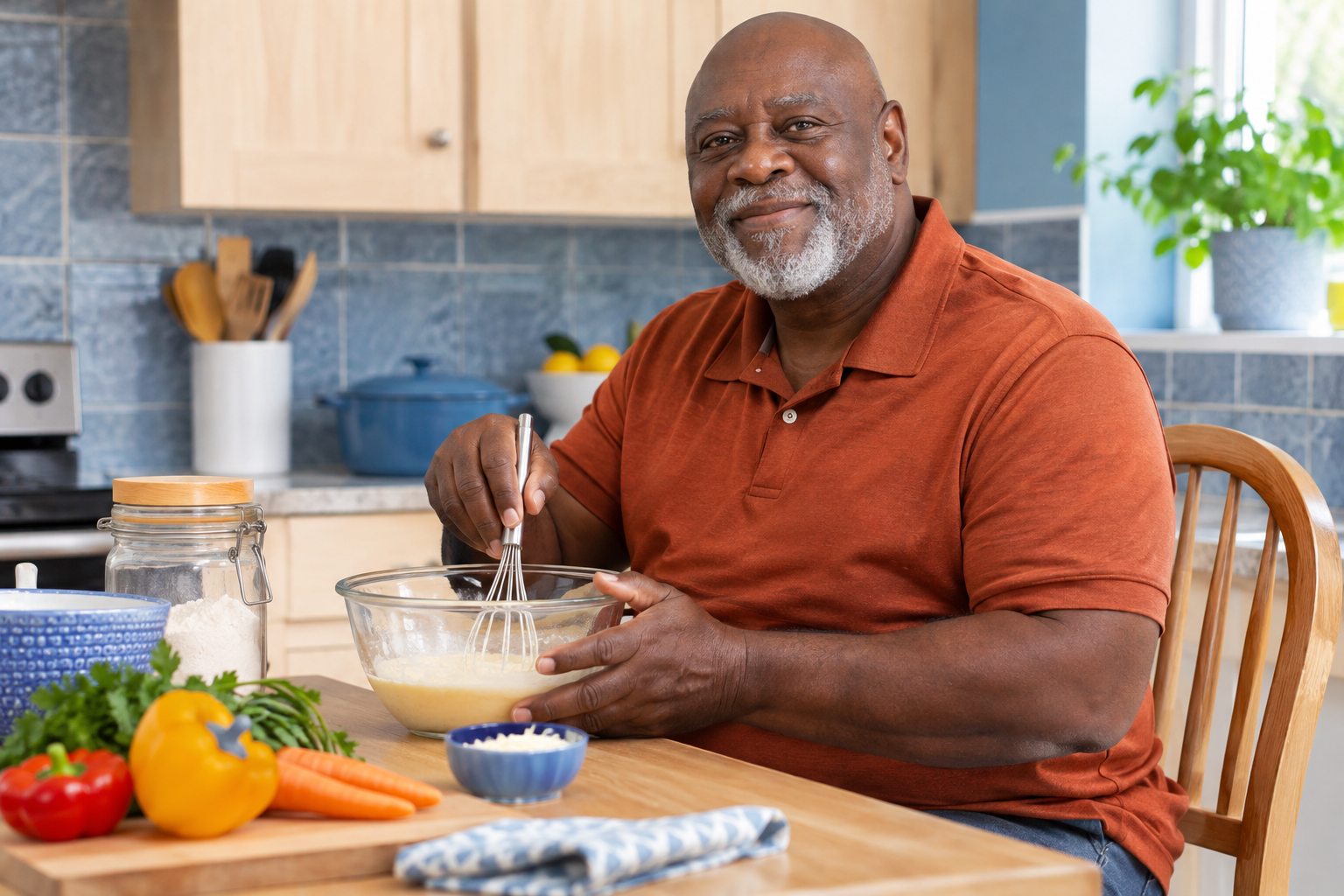
Cooking can hold so much more than a meal: a familiar recipe, a family ritual, a small piece of yourself. When standing becomes difficult, changing the setup can help you keep the parts you enjoy without asking your body to do everything the old way.
Bring the task to you
Try preparing ingredients at a table where your feet have support and your shoulders can relax. A sturdy chair with a back may be easier to use than a high stool. Keep your cutting board stable and the ingredients you need within comfortable reach. Ask someone to move heavy appliances; keep ventilation, cords, and hot surfaces safely arranged according to their instructions.
Separate preparation from cooking
Wash produce during one small window of energy, then put it away. Measure dry ingredients another time. Refrigerate perishable ingredients promptly between stages. There is no requirement to finish a recipe in one uninterrupted session.
Consider a gentler version of a favorite dish: ready-chopped vegetables, a smaller batch, or a mix that leaves you energy for decorating. These shortcuts still belong in a real kitchen.
If dizziness starts, leave the knife and hot pans safely in place and sit or lie somewhere safe. A chair is a useful adaptation, but it cannot make every kitchen task safe during symptoms. On some days, the kindest cooking plan is asking for help or choosing something ready to eat.