Tag: POTS

  • Surviving the Heat: POTS and Summer Struggles

    Surviving the Heat: POTS and Summer Struggles

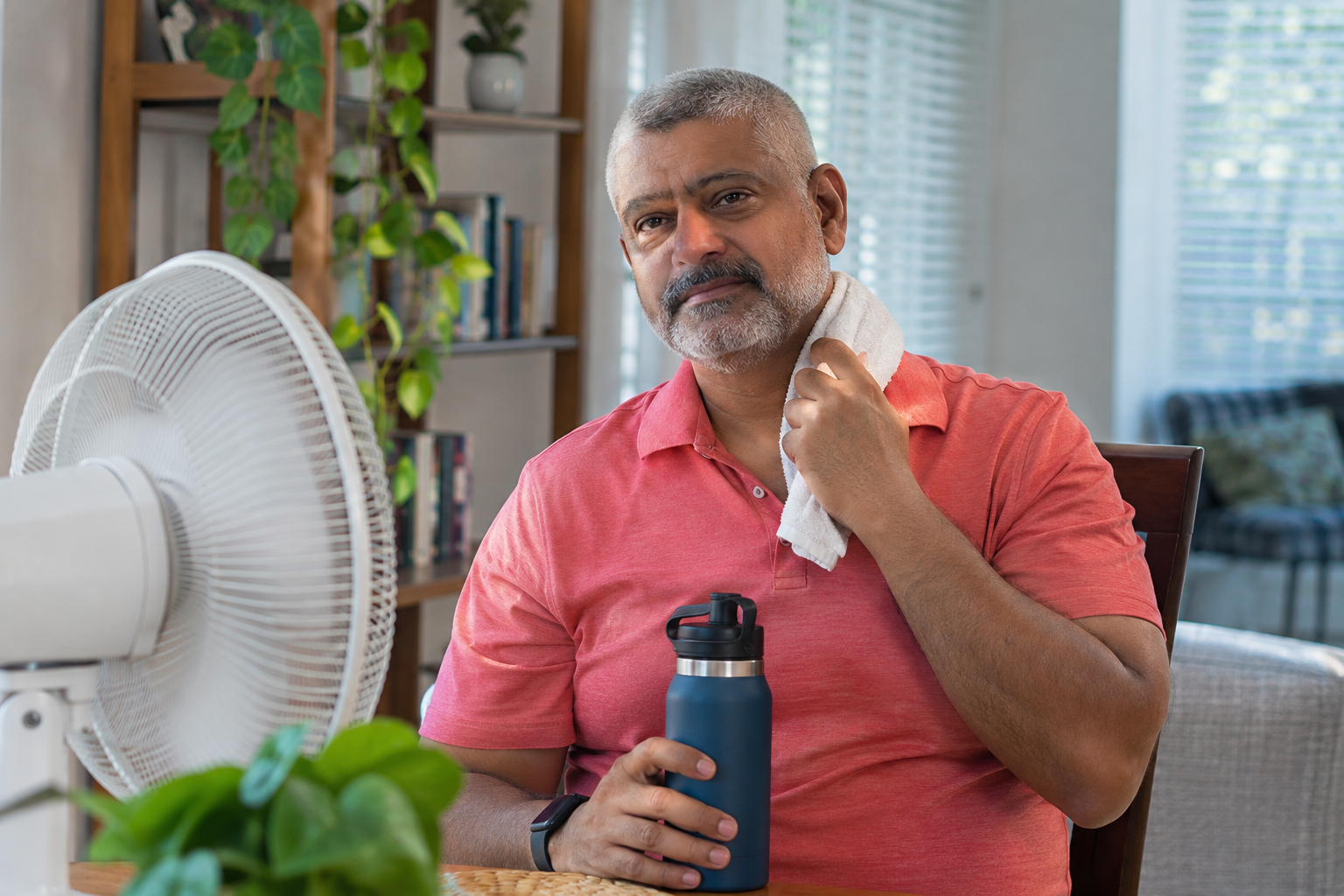
    Warm weather can change an ordinary outing into a careful calculation when you live with POTS. Heat may worsen symptoms, and a short queue in the sun can feel very different from a short queue indoors. Wanting a cooler place to sit is a practical access need.

    Plan for a place to pause

    Before going out, consider where you could sit, cool down, or leave early. An indoor alternative may be the best option. Cooler times of day can help with planning, but they do not guarantee that an activity will be tolerable.

    Light clothing and a portable fan may be useful if they suit you. Follow the instructions for cooling products and protect your skin rather than putting ice directly against it. Keep your usual care supplies accessible without carrying more than you can comfortably manage.

    Follow your own care plan

    Fluid and salt recommendations should come from your healthcare team, especially when other conditions or medicines affect what is appropriate. More is not automatically better. If symptoms begin, move to a safer, cooler place and get help when needed rather than trying to finish the outing first.

    It can be disappointing to change a summer plan. A friend can help by offering an air-conditioned visit or accepting an early departure without making it a debate. You deserve to participate in ways that respect your limits, including choosing to stay home when that is the right option for you.

    Further reading: Johns Hopkins Medicine: POTS.
  • Showering with POTS: Practical Tips for Low Energy Bathing

    Showering with POTS: Practical Tips for Low Energy Bathing

    Showering can take far more energy than its place on a morning checklist suggests. Standing, reaching, heat, and getting dry afterward may all add demands. With POTS, the bathroom can be a place where you need a more deliberate plan.

    Make the setup safer

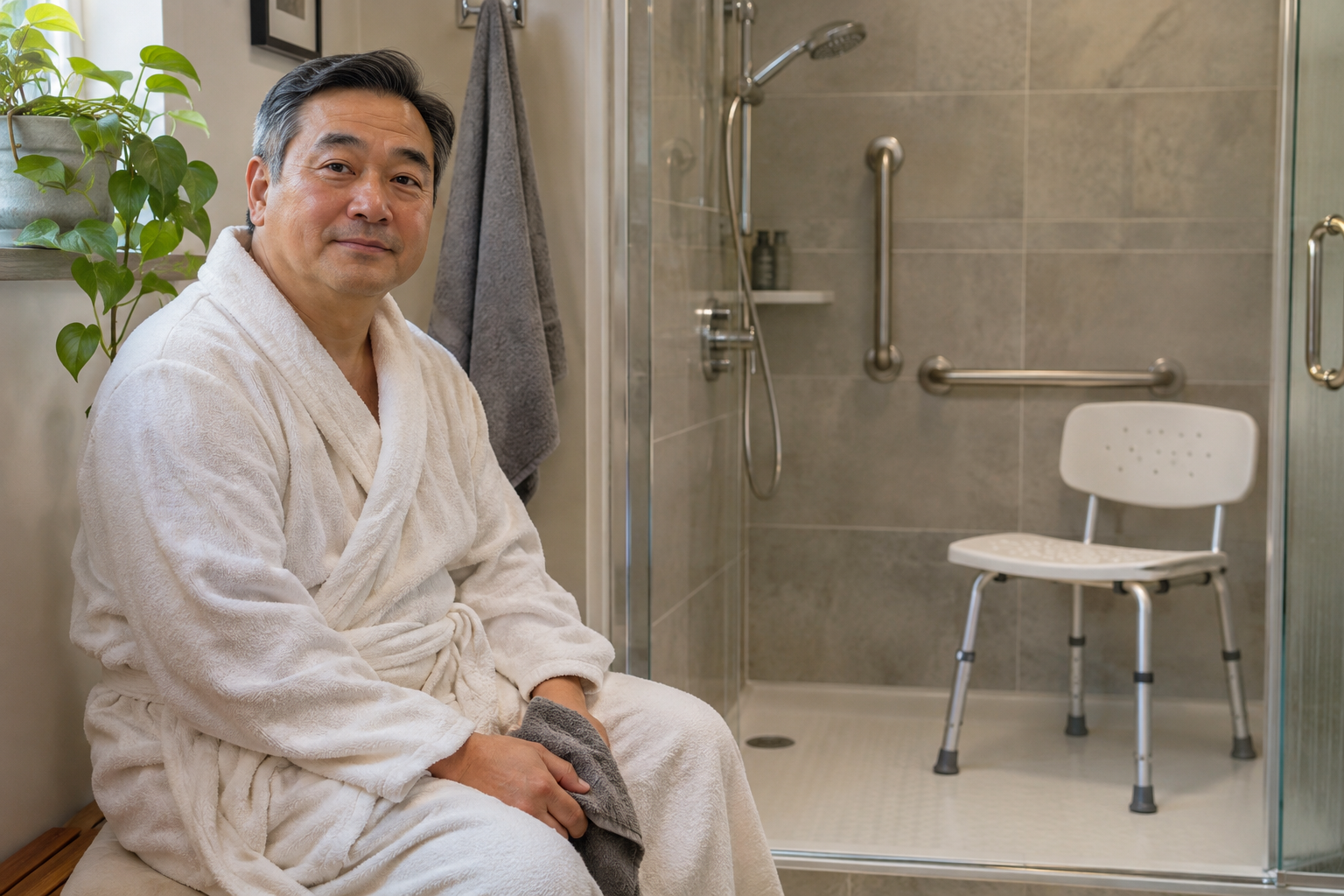
    A shower chair or bench designed for that purpose may help reduce standing. Choose equipment that fits the space and your needs, follow its instructions, and seek occupational therapy or other qualified advice if transfers or balance are difficult. A household stool is not automatically suitable for a wet shower.

    Keep frequently used items within comfortable reach and avoid climbing or stretching for them. Consider water temperature and ventilation as part of your individual symptom plan. If you begin feeling faint, prioritize safety and assistance rather than finishing your hair wash.

    Separate the steps

    Washing your body and washing your hair do not always need to happen together. A seated wash at the sink may be an alternative on some days. Put clothes, a towel, or an absorbent robe nearby so there is less to organize afterward.

    If you are at risk of fainting, discuss a bathing safety plan with your healthcare team and a trusted person. Privacy matters, and so does having a way to call for help.

    Adapting personal care is not giving up on yourself. You are allowed to choose the version that is safer and more manageable today, even if it looks different from your old routine.

  • A Racing Heart: Where Comfortable Breathing Fits—and Where It Does Not

    A Racing Heart: Where Comfortable Breathing Fits—and Where It Does Not

    A racing heart can feel alarming, and advice to “just breathe” can be dismissive when the cause has not been established. Comfortable breathing may help you settle while following your care plan, but it does not diagnose or treat an abnormal heart rhythm.

    Know when comfort is not enough

    Seek emergency help for palpitations that do not go away or occur with chest pain, breathlessness, faintness, or fainting. Recurring or changing episodes also need medical assessment. The NHS palpitations guidance explains these warning signs. Use your local emergency service and do not drive yourself when unwell.

    If you already have a diagnosis and an agreed plan for familiar episodes, follow that plan. Do not improvise breath holds, forceful straining, or other maneuvers from a general article. Such techniques are not appropriate for every cause of a fast heart rate.

    Make the immediate situation safer

    Sit or lie somewhere safe if you feel unsteady, keep your phone accessible, and ask for help if needed. Allow breathing to remain comfortable rather than forcing deep or slow breaths. If focusing on breathing makes you more distressed, look around the room or listen to a calm voice instead.

    You deserve a clear explanation and individualized care. Feeling frightened does not establish that anxiety caused the episode, and being calm does not remove the need for medical attention when warning signs are present.

  • POTS and Small Leg Movements: Support Without Pushing Through

    POTS and Small Leg Movements: Support Without Pushing Through

    Standing still can be particularly difficult for some people with POTS. Small leg movements or other physical strategies may be included in an individualized plan, but they are not a guarantee against blood pooling, dizziness, or fainting.

    Get advice that fits the situation

    Ask your clinician which strategies are appropriate for you and when to use them. Joint problems, pain, balance, and other conditions can affect the choice. A movement that is safe while seated may not be safe while you are already unsteady in a queue.

    If you feel faint, prioritize getting to a safe seated or lying position and following your care plan. Do not keep standing and exercising your legs in an effort to prove you can manage. Ask for help and avoid situations where a fall would be especially dangerous.

    Change the environment as well

    Request seating, reduce unnecessary standing, or use an appropriate mobility aid if recommended. Arrange tasks so you can sit before symptoms build rather than treating every episode as a test of your coping skills.

    The Johns Hopkins POTS overview describes a range of individualized treatment approaches. Movement is only one possible piece of that care. You deserve accommodations and medical support, not just instructions to make more adjustments with your own body while the demands around you stay the same.

  • The Kitchen Stool Revolution: Pacing Your Baking and Cooking

    The Kitchen Stool Revolution: Pacing Your Baking and Cooking

    Cooking can hold so much more than a meal: a familiar recipe, a family ritual, a small piece of yourself. When standing becomes difficult, changing the setup can help you keep the parts you enjoy without asking your body to do everything the old way.

    Bring the task to you

    Try preparing ingredients at a table where your feet have support and your shoulders can relax. A sturdy chair with a back may be easier to use than a high stool. Keep your cutting board stable and the ingredients you need within comfortable reach. Ask someone to move heavy appliances; keep ventilation, cords, and hot surfaces safely arranged according to their instructions.

    Separate preparation from cooking

    Wash produce during one small window of energy, then put it away. Measure dry ingredients another time. Refrigerate perishable ingredients promptly between stages. There is no requirement to finish a recipe in one uninterrupted session.

    Consider a gentler version of a favorite dish: ready-chopped vegetables, a smaller batch, or a mix that leaves you energy for decorating. These shortcuts still belong in a real kitchen.

    If dizziness starts, leave the knife and hot pans safely in place and sit or lie somewhere safe. A chair is a useful adaptation, but it cannot make every kitchen task safe during symptoms. On some days, the kindest cooking plan is asking for help or choosing something ready to eat.

  • Sodium and POTS: Making Your Individual Care Plan Easier

    Sodium and POTS: Making Your Individual Care Plan Easier

    When a clinician recommends additional sodium for POTS, the daily logistics can become surprisingly tiring. Salty drinks may get monotonous, supplements may upset your stomach, and online advice can make it sound as though everyone needs the same amount. They do not.

    Start with your own treatment plan

    Ask your clinician to clarify your sodium and fluid targets, how those targets fit your other conditions and medicines, and what to do when symptoms change. Increasing sodium is not appropriate for everyone. Do not use someone else’s target or take extra salt tablets as an improvised rescue treatment.

    Johns Hopkins describes POTS treatment as individualized, with approaches that may include fluid and dietary changes alongside other care. Read the Johns Hopkins POTS overview.

    Make the routine easier to live with

    If food-based sodium fits your plan, ask about options you already enjoy: broth, olives, crackers, or a savory addition to lunch. Check labels rather than guessing; brands and portions vary. A simple note of the foods you tolerate can be more useful than a complicated tracking system.

    Keep your agreed plan somewhere easy to find, including instructions about supplements. If nausea or taste fatigue makes it hard to follow, tell your care team. You are not failing treatment because a routine is difficult. That difficulty is information worth bringing into the next conversation.

  • Making Your Hydration Routine Easier to Follow

    Making Your Hydration Routine Easier to Follow

    Sometimes the hardest part of following a hydration plan is not remembering that water exists. It is lifting a heavy bottle, getting to the kitchen, opening a tight lid, or realizing your drink is just beyond reach when standing feels difficult.

    Remove one practical obstacle

    Choose a container you can comfortably lift and clean. A smaller cup refilled with help may be easier than a very large bottle. Place drinks where you actually spend time, on stable surfaces away from electronics and out of children’s reach when necessary.

    If reminders help, connect a check-in to something you already do, such as lunch or a scheduled medicine. A reminder can simply mean “notice what I need,” rather than “finish a whole bottle now.”

    Keep the medical plan personal

    Fluid needs differ, and some conditions require a restriction. If you have POTS, heart or kidney disease, take medicines affecting fluid balance, or have been advised to use electrolytes, ask your clinician what is appropriate for you. More fluid is not automatically better.

    Write down the plan in plain language, including what to do if you cannot keep fluids down. Avoid treating every episode of dizziness as proof you need another drink; new or worsening symptoms may need assessment. The aim is a routine that is easier to follow, not another daily scorecard that leaves you feeling behind.

  • Traveling with Dysautonomia and POTS

    Traveling with Dysautonomia and POTS

    Travel can involve long lines, warm spaces, unfamiliar food, and much more standing than the itinerary suggests. If you have POTS or another form of dysautonomia, planning for those hidden demands may matter as much as booking the journey itself.

    Ask about the whole route

    Check the distance between entrances, seating, transport, and accommodation. Contact the transport provider about assistance before the trip and confirm how it works; assistance does not necessarily remove every wait or guarantee immediate access. Build in extra time without filling that time with more activities.

    Keep essential medicines in their appropriate packaging and follow storage requirements. Carry your care plan and important contact details where you or a companion can find them. Ask your clinician about travel-specific concerns, including any compression or hydration plan already prescribed for you.

    Make room for a smaller trip

    Plan a quiet arrival period and leave optional activities genuinely optional. A nearby visit, an overnight stay, or postponing travel may be the right choice at different times. That decision does not measure your courage or enthusiasm.

    Discuss what happens if symptoms worsen, including where to seek care and how to change plans. No packing list can make travel risk-free. The purpose of preparation is to reduce avoidable strain and make support easier to access, while keeping your preferences and limits at the center of the trip.

  • Nighttime Hydration: Comfort, Access, and When to Ask for Help

    Nighttime Hydration: Comfort, Access, and When to Ask for Help

    Waking thirsty or uncomfortable can make you wonder whether you should change what you drink before bed. A small practical adjustment may help with access, but nighttime symptoms deserve more care than a blanket instruction to drink extra electrolytes.

    Make your existing plan easier

    Keep a manageable drink within reach on a stable surface if that suits your care plan. A spill-resistant container may be helpful if lifting a glass is difficult. Arrange a clear, well-lit route to the bathroom, and use any mobility supports you normally need.

    If late drinks repeatedly interrupt sleep with bathroom trips, mention the pattern to your clinician. Fluid timing may need individual advice, particularly if you have a prescribed fluid limit or take medicines affecting urination or blood pressure.

    Do not assume the cause

    A racing heart at night is not automatically dehydration. Recurrent or changing palpitations need medical assessment. Palpitations that do not settle, or occur with chest pain, breathlessness, faintness, or fainting, require urgent emergency evaluation. The NHS palpitations guidance describes these warning signs; use your local emergency service.

    Keep brief notes about when symptoms occur and what accompanies them, without making yourself monitor every sensation all night. Bring those notes to your care team. The aim is a safer, more comfortable routine based on your needs, not another remedy you have to experiment with alone at two in the morning.

  • Reclined Movement and POTS: Finding an Individual Starting Point

    Reclined Movement and POTS: Finding an Individual Starting Point

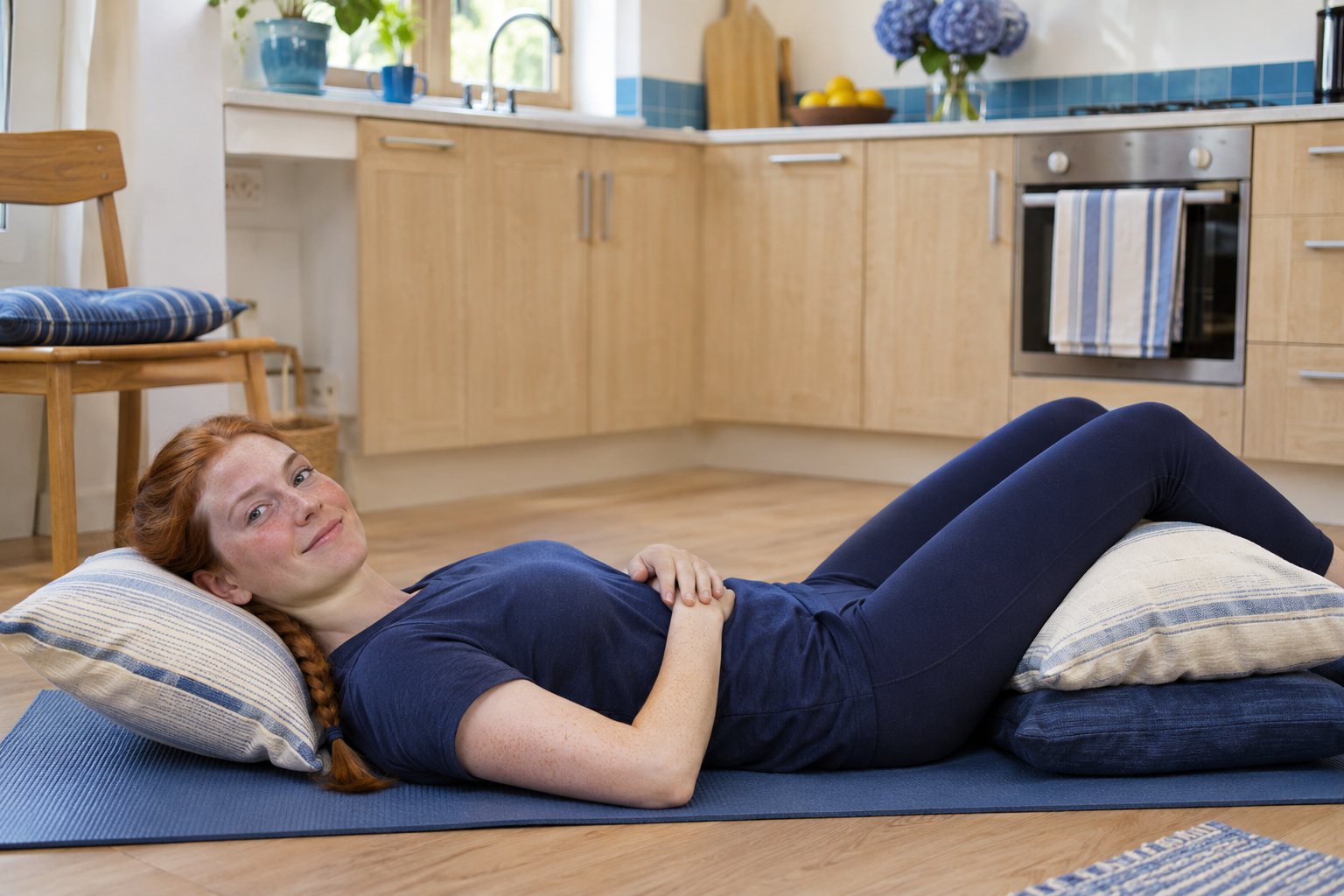
    If standing brings dizziness or a racing heart, movement advice can feel as though it was written for somebody else. Reclined or seated activity may be part of an individualized POTS plan, but being horizontal does not make an activity effortless or suitable for everyone.

    Begin with the right support

    Ask a clinician or physiotherapist familiar with your condition what is appropriate for you, especially if you also experience post-exertional malaise, joint instability, or significant pain. Johns Hopkins’ POTS guidance emphasizes treatment tailored to the individual.

    If you have already been given a movement plan, arrange a supported position and an easy way to stop. Getting down to the floor and back up may be more demanding than the activity itself; a suitable bed or other clinician-approved setup may be more accessible.

    Notice the whole response

    Do not judge tolerance only by your heart rate or how you feel during a session. Pay attention to later symptoms and share changes with your care team. Avoid increasing activity automatically because a calendar or online program says it is time.

    On a difficult day, comfortable positioning may be all you choose. You are not missing an opportunity by resting. Movement is one possible part of care, and it should fit your health and your goals rather than become another obligation to prove you are trying.