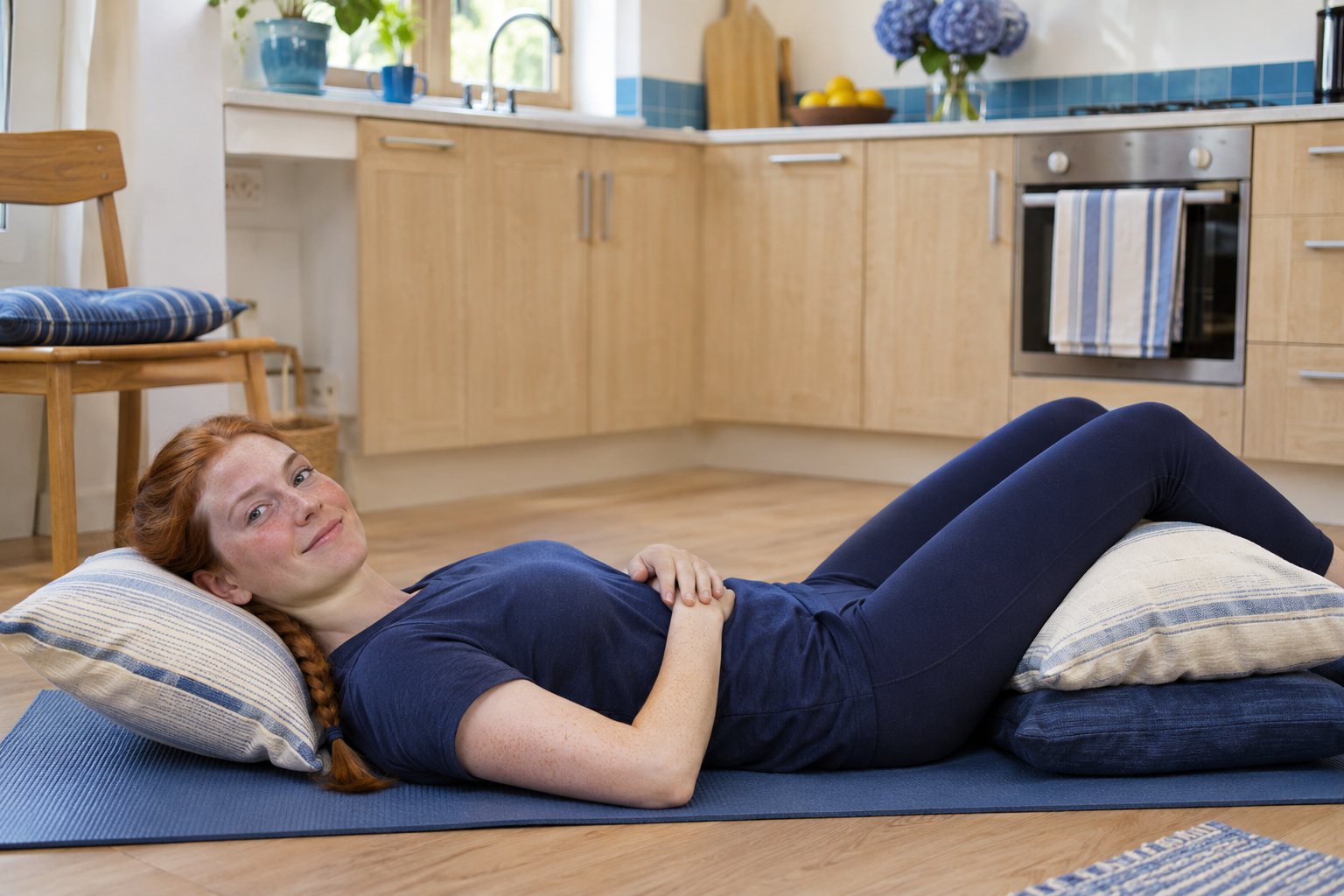
If standing brings dizziness or a racing heart, movement advice can feel as though it was written for somebody else. Reclined or seated activity may be part of an individualized POTS plan, but being horizontal does not make an activity effortless or suitable for everyone.
Begin with the right support
Ask a clinician or physiotherapist familiar with your condition what is appropriate for you, especially if you also experience post-exertional malaise, joint instability, or significant pain. Johns Hopkins’ POTS guidance emphasizes treatment tailored to the individual.
If you have already been given a movement plan, arrange a supported position and an easy way to stop. Getting down to the floor and back up may be more demanding than the activity itself; a suitable bed or other clinician-approved setup may be more accessible.
Notice the whole response
Do not judge tolerance only by your heart rate or how you feel during a session. Pay attention to later symptoms and share changes with your care team. Avoid increasing activity automatically because a calendar or online program says it is time.
On a difficult day, comfortable positioning may be all you choose. You are not missing an opportunity by resting. Movement is one possible part of care, and it should fit your health and your goals rather than become another obligation to prove you are trying.