Category: Daily Management

  • The Art of Dynamic Pacing

    The Art of Dynamic Pacing

    A better day can bring a strong urge to catch up. The laundry is waiting, messages have piled up, and you miss the satisfaction of finishing things. It is understandable to use a window of energy when it appears. It can also be painful when doing so is followed by a difficult crash.

    Dynamic pacing means adjusting demands to your changing capacity. Sometimes that means a shorter task. Sometimes it means less activity altogether. It does not require constant monitoring, and it cannot guarantee stable symptoms.

    Look beyond the visible chores

    A phone call, a noisy room, or a complicated form can be demanding too. When planning a day, leave space around those activities rather than counting only movement or housework. If you experience post-exertional malaise, account for delayed worsening and discuss pacing with someone familiar with your condition.

    Choose one useful adjustment

    You might sort only part of a drawer, sit while preparing ingredients, or ask someone else to make the call. A reminder can help you pause, but the timer should not dictate how much you must accomplish. There is no universally appropriate five-minute or ten-minute activity interval.

    Keep a place to note unfinished tasks so you do not have to hold them all in your head. Returning to them later is an option, not a debt you must repay tomorrow.

    Pacing can involve grief about doing less. You can acknowledge that disappointment while still making the choice that is gentler for your body today.

    Further reading: CDC: Activity management and PEM.

  • The Reality of Food Prep with Chronic Fatigue

    The Reality of Food Prep with Chronic Fatigue

    A meal can require more steps than anyone notices until energy becomes scarce. Finding ingredients, standing, chopping, watching the stove, and clearing up may use the energy you hoped to spend eating. If cooking feels difficult, that difficulty is real.

    Convenience foods can be useful tools. A meal does not become less worthwhile because the vegetables were frozen or someone else prepared it. What works will depend on your preferences, budget, allergies, and individual dietary needs.

    Make assembly an option

    Keep a short list of familiar meals that need little preparation. Ready-cooked grains, canned beans, or a prepared component may reduce the number of steps. Choose foods that fit your own needs rather than trying to follow a perfect online meal plan.

    If seated preparation is comfortable, use a stable chair and table, with supplies within reach. Avoid moving hot pans or using sharp tools when dizziness or concentration problems make that unsafe. Asking for help with those parts still leaves room to participate in ways you enjoy.

    Let leftovers reduce work

    Making extra can help only when the additional preparation is manageable. You do not owe future-you a large batch on every better day. Follow food-storage instructions and refrigerate perishable food promptly; labels can make it easier to remember what is available.

    There will be days when a ready-to-eat meal is the most caring choice. Being fed matters more than proving that you cooked from scratch.

  • Rebuilding Your Morning Routine Around Your Body

    Rebuilding Your Morning Routine Around Your Body

    Mornings can begin with a body that already feels overworked. Stiffness, nausea, dizziness, or exhaustion may arrive before you have answered a message or put on your shoes. A routine designed around rushing can make that first stretch of the day feel like a series of obstacles.

    You are allowed to build a morning around what is possible now. That might mean preparing a few things the evening before, asking for help, or accepting that the essential tasks will take longer.

    Reduce the decisions

    Put comfortable clothes, breakfast options, and frequently used supplies where they are easy to reach. Keep medicines stored safely and take them according to their instructions; being near the bed does not mean a medicine should be taken before food or at a different time.

    Choose a short sequence that works for you: getting comfortably upright, washing, eating, and checking what is essential today. The order can change. If movement is part of your care plan, adapt it to symptoms rather than treating stretching as a mandatory morning achievement.

    Keep a smaller version ready

    On a difficult day, a seated wash and simple breakfast may be enough. On another day, you may manage more. A routine with a smaller version gives you somewhere to turn without inventing a new plan while exhausted.

    Slow mornings can still contain meaningful things: a familiar drink, a kind message, or a few quiet minutes. None of them has to become another task to complete.

  • Social Plans That Make Room for Your Energy Limits

    Social Plans That Make Room for Your Energy Limits

    Wanting company and needing to protect your energy can both be true. Social plans do not have to be an all-or-nothing decision, though it can take practice to ask for a version that fits your current capacity.

    Plan the edges of the visit

    Consider the travel, parking, noise, seating, and recovery time as well as the event itself. A short visit nearby may be more manageable than a quiet activity with a long journey. Ask about access before committing, and make a leaving plan that does not depend on persuading everyone else to go.

    You might say, “I’d love to come for the first half hour. I may need to leave earlier if symptoms change.” Or suggest a call, a smaller gathering, or company at home.

    Leave room to change your mind

    Canceling can feel painful, especially when you miss people. A simple message is enough: “I’m not well enough today, and I’m disappointed to miss you. Could we find another way to connect?” You do not owe a detailed defense of your symptoms.

    Planning may reduce some demands, but it cannot guarantee you will avoid a crash. Notice how activities affect you afterward and use that information gently. A friendship can make room for uncertainty, practical adjustments, and honest disappointment. You deserve connection that does not require pretending you have more capacity than you do.

  • Meal Prep Strategies for Chronic Fatigue

    Meal Prep Strategies for Chronic Fatigue

    Meal prep advice often assumes you have enough energy to spend a whole afternoon chopping, cooking, portioning, and cleaning. When fatigue is part of daily life, that approach may use the very energy you were hoping to save.

    Prepare one helpful component

    Choose a small task with a useful payoff: wash a few pieces of fruit, portion crackers, or make one extra serving of dinner. Ready-cooked grains, frozen vegetables, canned beans, and prepared foods can all be part of a workable plan. The best shortcut is the one you can eat, afford, and tolerate.

    Keep a short list of meals that require very little assembly. For example, soup with toast, yogurt with cereal, or a microwave grain pouch with a familiar protein. Include options for days when even assembling a meal is too much.

    Count cleanup as part of cooking

    Before starting, consider the dishes, lifting, and food storage involved. Use lighter containers and smaller portions if carrying a large pot is difficult. Refrigerate perishable food promptly and follow storage and reheating guidance; a rest break should not leave ingredients sitting out for hours.

    Ask for concrete help when it is available: “Could you portion this into containers?” is easier to act on than a general request to help with meals. Feeding yourself is the priority. A stocked freezer or a beautiful row of matching containers is optional.

  • Managing Sensory Overload at Home

    Managing Sensory Overload at Home

    A bright light, a humming appliance, and several conversations can feel like a lot when symptoms are already taking up your attention. Making home less stimulating does not require an expensive makeover or silence in every room.

    Change one source of input

    Notice the sensation that bothers you most right now. Could you switch off an overhead light, lower the television, close a door, or move away from a strong scent? Choose the smallest change that is easy to reverse.

    Headphones, earplugs, curtains, or softer clothing may be useful if you tolerate them. Keep important alarms audible and maintain appropriate awareness if you are supervising children or someone else depends on you. Comfort tools should fit the responsibilities of the moment.

    Give the household a clear signal

    A simple phrase such as “I need a quieter ten minutes” can be easier than explaining everything while overwhelmed. If you share a home, agree on a space or time where stimulation can be reduced without making anyone guess what you need.

    You do not need to prove that a sound is objectively loud or a light is objectively harsh. What matters is how the environment feels to you. If sensory changes are new, severe, or accompanied by other concerning symptoms, discuss them with a clinician. For familiar difficult days, one calmer corner can be a useful place to begin.

  • Traveling with Dysautonomia and POTS

    Traveling with Dysautonomia and POTS

    Travel can involve long lines, warm spaces, unfamiliar food, and much more standing than the itinerary suggests. If you have POTS or another form of dysautonomia, planning for those hidden demands may matter as much as booking the journey itself.

    Ask about the whole route

    Check the distance between entrances, seating, transport, and accommodation. Contact the transport provider about assistance before the trip and confirm how it works; assistance does not necessarily remove every wait or guarantee immediate access. Build in extra time without filling that time with more activities.

    Keep essential medicines in their appropriate packaging and follow storage requirements. Carry your care plan and important contact details where you or a companion can find them. Ask your clinician about travel-specific concerns, including any compression or hydration plan already prescribed for you.

    Make room for a smaller trip

    Plan a quiet arrival period and leave optional activities genuinely optional. A nearby visit, an overnight stay, or postponing travel may be the right choice at different times. That decision does not measure your courage or enthusiasm.

    Discuss what happens if symptoms worsen, including where to seek care and how to change plans. No packing list can make travel risk-free. The purpose of preparation is to reduce avoidable strain and make support easier to access, while keeping your preferences and limits at the center of the trip.

  • Navigating Grocery Shopping with Energy Constraints

    Navigating Grocery Shopping with Energy Constraints

    Grocery shopping includes a surprising number of jobs: planning, traveling, walking, choosing, waiting, carrying, and putting everything away. If you run out of energy before reaching the checkout, the problem may be the size of the task rather than your preparation.

    Reduce the trip before you begin

    Keep a short list of dependable meals and the ingredients they share. Arrange the list by store section if that makes it easier to follow. Choose a smaller shop or a quieter time when those options are accessible to you.

    Delivery or pickup may help, but fees, substitutions, and availability matter. Ask a friend to pick up a few items during their own trip, share an order if practical, or use a store’s accessibility services. You do not need to justify choosing convenience when it fits your circumstances.

    Plan for getting home

    Use smaller bags and ask for carrying help where available. Put refrigerated and frozen foods away first; shelf-stable items can wait briefly while you rest. Keep pathways clear so bags do not become a fall hazard.

    Use a prescribed mobility aid when needed; a shopping cart is not designed to replace one. If symptoms make shopping unsafe, stop and ask for assistance. A small shop that meets the next day’s needs can be a successful shop. There is no requirement to stock an entire week at once.

  • Making Laundry More Manageable with Chronic Pain

    Making Laundry More Manageable with Chronic Pain

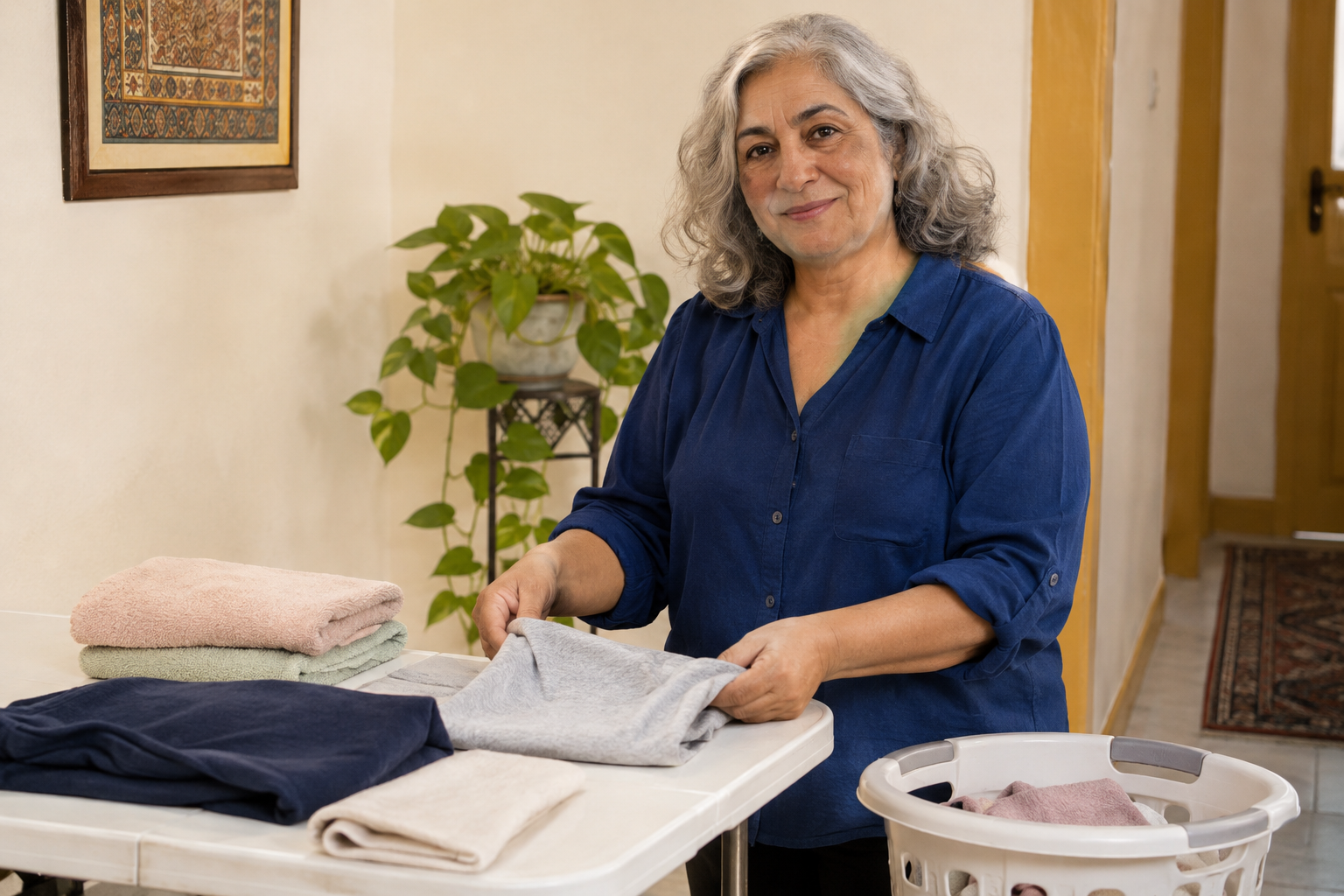
    Laundry asks for lifting, bending, reaching, sorting, and decisions. When pain makes those movements expensive, “just put a load in” is not a very complete description of the work.

    Make the load smaller in more than one way

    Use a lighter basket or divide a load before moving it. If someone can help, ask them to handle the specific part that is hardest, such as carrying laundry between floors. A wheeled basket may be useful on an appropriate clear surface, but it should not create a new trip hazard.

    Fold or sort at a comfortable height if you choose to do those steps. Clean clothes can also live in labeled baskets or drawers without being perfectly folded. Separate the need for usable clothing from the preference for a particular finish.

    Build a stopping point into the process

    Choose a load you can manage through washing and drying, or arrange help before starting. Set a reminder if forgetting wet clothes is a frequent problem. Keep detergent stored securely and within a reach that does not require climbing or painful stretching.

    A household agreement can make laundry less invisible: one person starts it, another moves it, another puts away essentials. You are allowed to redesign a chore instead of repeatedly proving you can perform it the old way. Clean enough, accessible enough, and manageable enough are useful standards.

  • Simplifying Skincare and Hygiene on Low Days

    Simplifying Skincare and Hygiene on Low Days

    On a low-capacity day, a routine that usually takes ten minutes can feel enormous. Hygiene can be adapted around what matters most today, without turning every skipped step into a judgment about how well you are coping.

    Choose a smaller version

    Separate essential care from optional skincare. A washcloth, a seated wash, or a simpler product routine may be more manageable than a full shower. Use products you already tolerate, and avoid harsh scrubbing or adding unfamiliar ingredients when your skin is irritated.

    Keep supplies together in an accessible place. If a shower chair or other aid would help, choose equipment designed for the purpose and appropriate for your space. An ordinary household stool may not be safe on a wet surface.

    Make help less awkward

    If you need assistance, name the part you want help with and the privacy you want to keep: “Could you set out towels and stay nearby while I shower?” Support can be practical without taking away your choices.

    Follow specific clinical advice for wounds, skin conditions, dental care, or other health needs. If essential care has become consistently difficult, tell your care team and ask about support. You deserve practical assistance, not a lecture about motivation. A simplified routine can be a thoughtful response to limited energy, and tomorrow’s routine can be different.