Tag: Energy Conservation

  • The Kitchen Stool Revolution: Pacing Your Baking and Cooking

    The Kitchen Stool Revolution: Pacing Your Baking and Cooking

    Cooking can hold so much more than a meal: a familiar recipe, a family ritual, a small piece of yourself. When standing becomes difficult, changing the setup can help you keep the parts you enjoy without asking your body to do everything the old way.

    Bring the task to you

    Try preparing ingredients at a table where your feet have support and your shoulders can relax. A sturdy chair with a back may be easier to use than a high stool. Keep your cutting board stable and the ingredients you need within comfortable reach. Ask someone to move heavy appliances; keep ventilation, cords, and hot surfaces safely arranged according to their instructions.

    Separate preparation from cooking

    Wash produce during one small window of energy, then put it away. Measure dry ingredients another time. Refrigerate perishable ingredients promptly between stages. There is no requirement to finish a recipe in one uninterrupted session.

    Consider a gentler version of a favorite dish: ready-chopped vegetables, a smaller batch, or a mix that leaves you energy for decorating. These shortcuts still belong in a real kitchen.

    If dizziness starts, leave the knife and hot pans safely in place and sit or lie somewhere safe. A chair is a useful adaptation, but it cannot make every kitchen task safe during symptoms. On some days, the kindest cooking plan is asking for help or choosing something ready to eat.


  • Gentle Parenting on Low Energy Days

    Gentle Parenting on Low Energy Days

    Low-energy parenting can bring a particular kind of ache: you want to be present, but your body needs less noise, less movement, and more rest. A quieter day can still contain warmth, connection, and dependable care.

    Make a small menu of togetherness

    Keep a few options that work from a supported seat: reading aloud, listening to an audiobook, drawing side by side, or letting your child tell you the story behind their toys. A familiar show together can also be a practical choice. You do not have to make every hour educational.

    Try a simple explanation: “My body needs a slower day. I still want to spend time with you. Would you like a story or some drawing?” Offer choices that are actually manageable for you.

    Ask adults for adult help

    Children can have age-appropriate household roles, but they should not become responsible for managing your symptoms or keeping you medically safe. If you may faint, need to sleep, or cannot supervise safely, arrange another responsible adult where possible. Keep medicines and other hazards secured even when resting spaces change.

    Food, safety, affection, and enough structure for the day are meaningful priorities. Elaborate activities can wait. If guilt arrives, imagine how you would speak to another parent in the same situation. Your child does not need a parent who never needs care; they need relationships where care and limits can coexist.

  • The Art of Micro Resting During the Workday

    The Art of Micro Resting During the Workday

    There is a kind of work break that becomes another task: answering personal messages, ordering groceries, or scrolling through upsetting news. Those activities may be necessary, but they do not always give your attention or body much of a pause.

    Try a break with less input

    Set the work aside for a brief moment. Let your hands rest, look away from the screen, or sit with your eyes open and notice something ordinary in the room. You do not need a breathing technique, a timer, or a perfectly quiet space to begin.

    If closing your eyes or focusing inward feels uncomfortable, choose an outward anchor, such as the view through a window. If changing position helps, do so within your usual limits. Rest can be stillness, but it does not have to look one particular way.

    Make pauses possible at work

    Build small gaps between meetings when you control the calendar. Keep a short status message ready: “I’m away from my desk briefly and will reply when I return.” For jobs with tightly scheduled breaks, an accommodation discussion may be more useful than advice to simply pause more often.

    Micro-resting is an option, not a guarantee against a flare or a substitute for adequate time off. If your workload exceeds what you can manage, that is a workload problem too. A brief break should support you, not become a reason you are expected to tolerate more.

  • Meal Prep Strategies for Chronic Fatigue

    Meal Prep Strategies for Chronic Fatigue

    Meal prep advice often assumes you have enough energy to spend a whole afternoon chopping, cooking, portioning, and cleaning. When fatigue is part of daily life, that approach may use the very energy you were hoping to save.

    Prepare one helpful component

    Choose a small task with a useful payoff: wash a few pieces of fruit, portion crackers, or make one extra serving of dinner. Ready-cooked grains, frozen vegetables, canned beans, and prepared foods can all be part of a workable plan. The best shortcut is the one you can eat, afford, and tolerate.

    Keep a short list of meals that require very little assembly. For example, soup with toast, yogurt with cereal, or a microwave grain pouch with a familiar protein. Include options for days when even assembling a meal is too much.

    Count cleanup as part of cooking

    Before starting, consider the dishes, lifting, and food storage involved. Use lighter containers and smaller portions if carrying a large pot is difficult. Refrigerate perishable food promptly and follow storage and reheating guidance; a rest break should not leave ingredients sitting out for hours.

    Ask for concrete help when it is available: “Could you portion this into containers?” is easier to act on than a general request to help with meals. Feeding yourself is the priority. A stocked freezer or a beautiful row of matching containers is optional.

  • Making Laundry More Manageable with Chronic Pain

    Making Laundry More Manageable with Chronic Pain

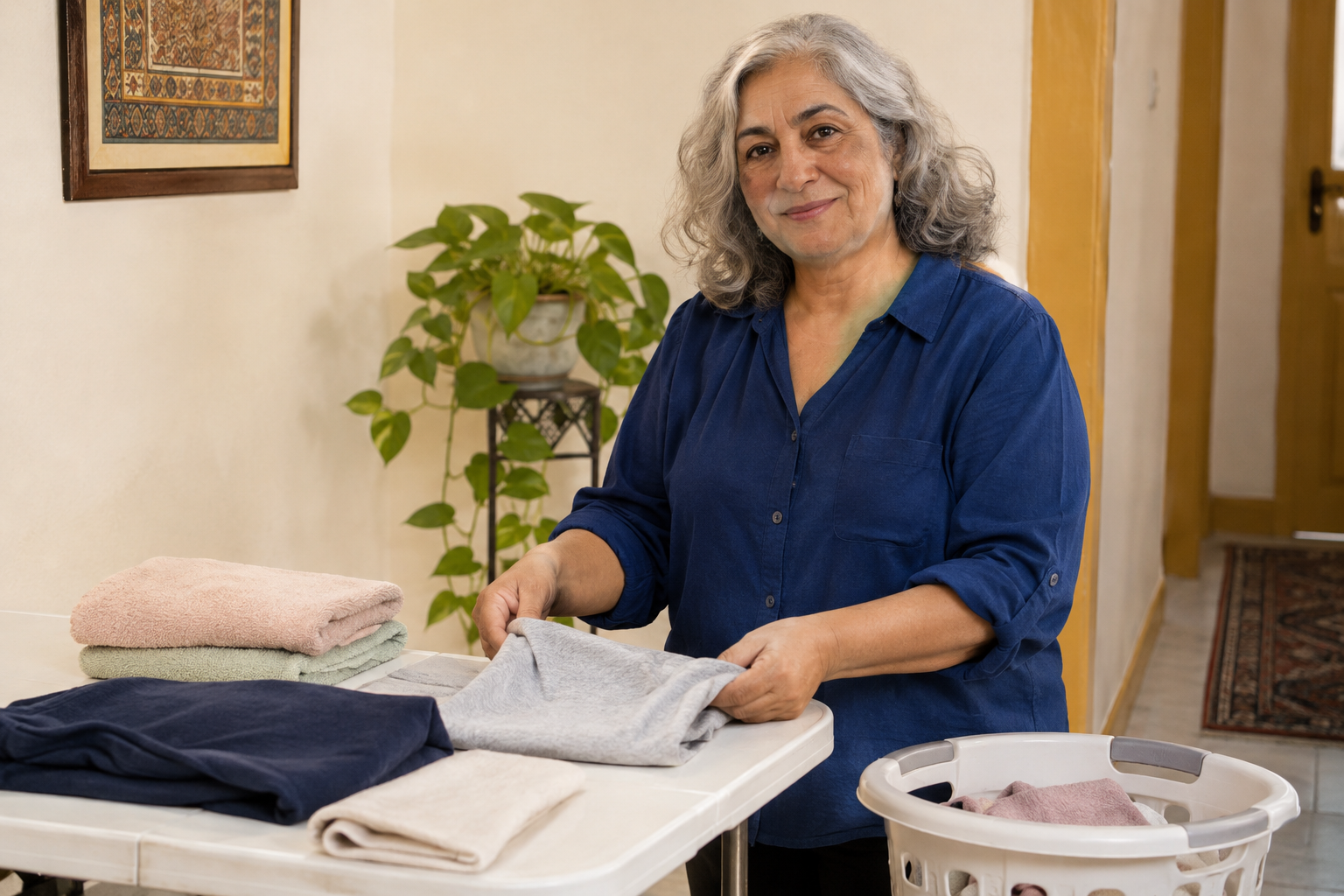
    Laundry asks for lifting, bending, reaching, sorting, and decisions. When pain makes those movements expensive, “just put a load in” is not a very complete description of the work.

    Make the load smaller in more than one way

    Use a lighter basket or divide a load before moving it. If someone can help, ask them to handle the specific part that is hardest, such as carrying laundry between floors. A wheeled basket may be useful on an appropriate clear surface, but it should not create a new trip hazard.

    Fold or sort at a comfortable height if you choose to do those steps. Clean clothes can also live in labeled baskets or drawers without being perfectly folded. Separate the need for usable clothing from the preference for a particular finish.

    Build a stopping point into the process

    Choose a load you can manage through washing and drying, or arrange help before starting. Set a reminder if forgetting wet clothes is a frequent problem. Keep detergent stored securely and within a reach that does not require climbing or painful stretching.

    A household agreement can make laundry less invisible: one person starts it, another moves it, another puts away essentials. You are allowed to redesign a chore instead of repeatedly proving you can perform it the old way. Clean enough, accessible enough, and manageable enough are useful standards.

  • Working from Bed: A Supported Setup and Clear Limits

    Working from Bed: A Supported Setup and Clear Limits

    Sometimes bed is the only place you can tolerate being, and a small amount of work still feels necessary or meaningful. A supported setup may make that choice easier, but working from bed is still work. It does not provide the same rest as putting the task down.

    Keep the arrangement simple

    Use a stable surface designed to hold the device safely, with ventilation unobstructed. Position the screen so you are not straining to see it, and support your arms where comfortable. Keep chargers, drinks, and cables arranged to reduce spills, overheating, and tangles.

    If raising the screen makes typing awkward, a separate keyboard may help. Avoid balancing a heavy device where it could fall onto you. Ask for assistance moving equipment if lifting or reaching worsens symptoms.

    Give the task an endpoint

    Choose one defined piece of work, such as reviewing a short document, rather than opening the whole day’s inbox. Leave room to stop sooner. Cognitive effort can be demanding even when you are lying down, especially if you experience post-exertional symptom worsening.

    If symptoms are severe, sick leave or a change in expectations may be more appropriate than a better tray. Discuss recurring needs with your employer or care team. You do not owe productivity from every resting place. The setup is an option for your use, not a standard you must meet when you are unwell.