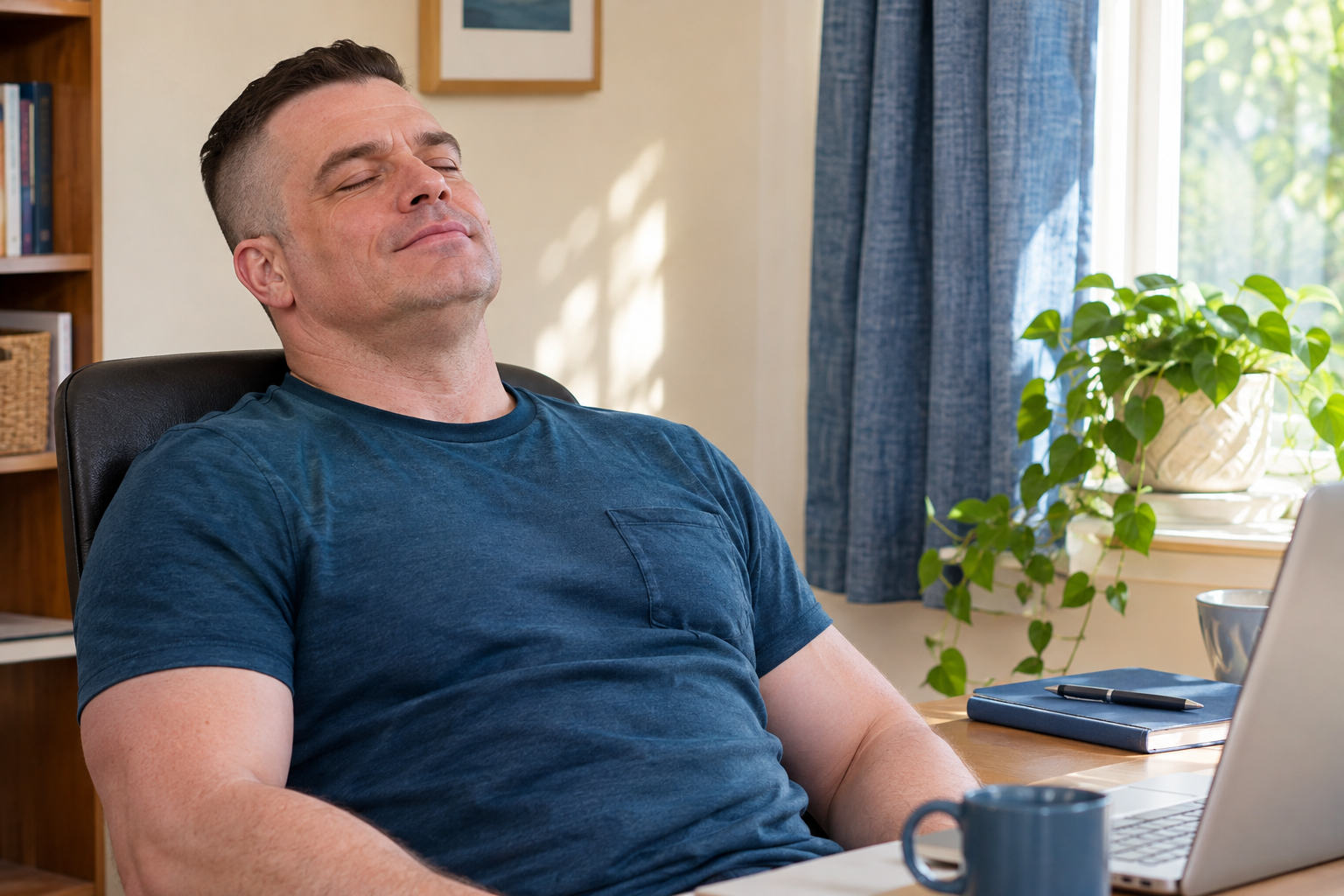
There is a kind of work break that becomes another task: answering personal messages, ordering groceries, or scrolling through upsetting news. Those activities may be necessary, but they do not always give your attention or body much of a pause.
Try a break with less input
Set the work aside for a brief moment. Let your hands rest, look away from the screen, or sit with your eyes open and notice something ordinary in the room. You do not need a breathing technique, a timer, or a perfectly quiet space to begin.
If closing your eyes or focusing inward feels uncomfortable, choose an outward anchor, such as the view through a window. If changing position helps, do so within your usual limits. Rest can be stillness, but it does not have to look one particular way.
Make pauses possible at work
Build small gaps between meetings when you control the calendar. Keep a short status message ready: “I’m away from my desk briefly and will reply when I return.” For jobs with tightly scheduled breaks, an accommodation discussion may be more useful than advice to simply pause more often.
Micro-resting is an option, not a guarantee against a flare or a substitute for adequate time off. If your workload exceeds what you can manage, that is a workload problem too. A brief break should support you, not become a reason you are expected to tolerate more.