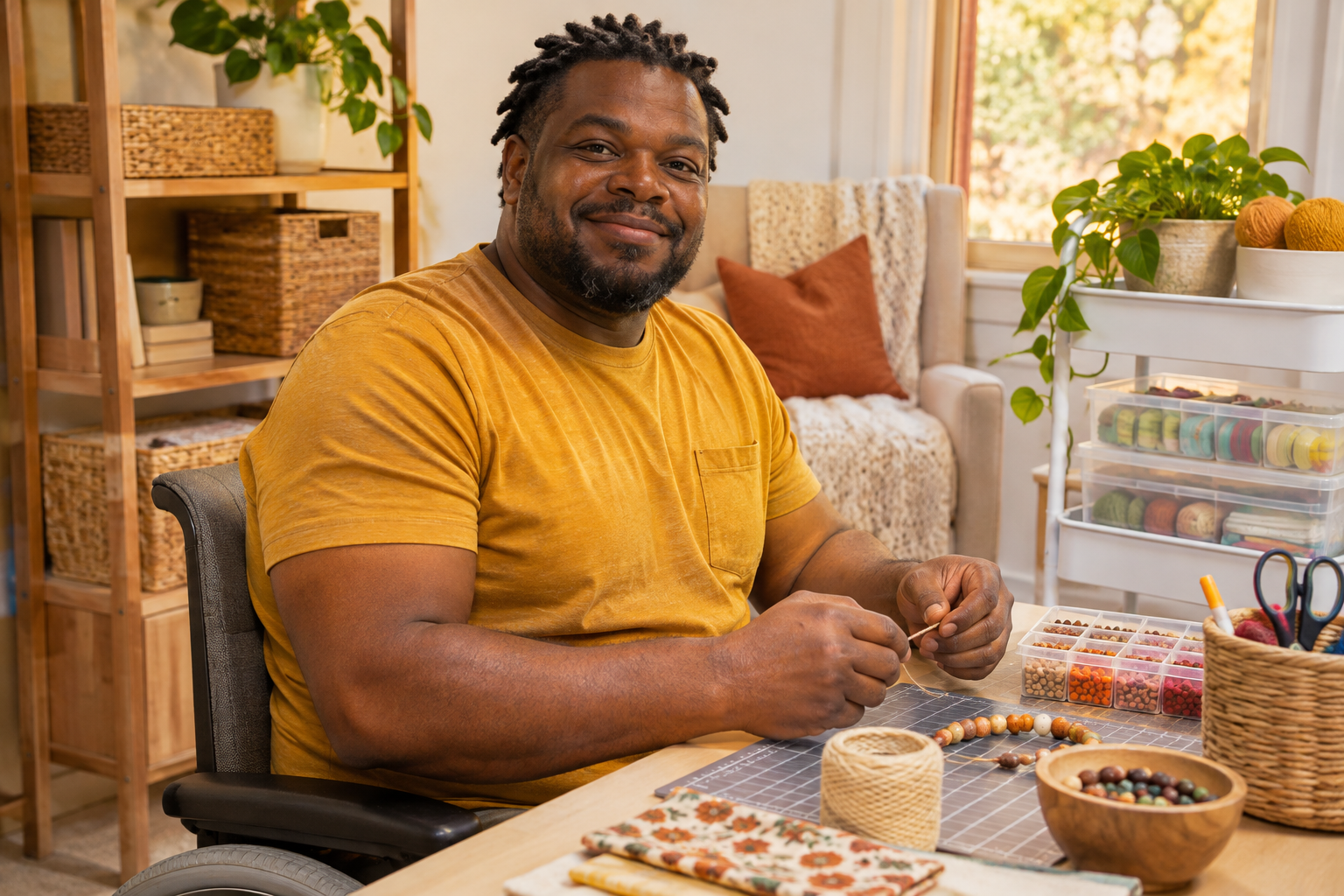
An accessible crafting space does not have to look like a studio. It might be one tray, a comfortable chair, and the materials for a project you genuinely want to make. The space should reduce the effort between you and the enjoyable part.
Bring the most-used supplies close
Keep frequently used tools within a comfortable reach and use smaller containers if large boxes are heavy. A stable work surface and suitable lighting can make it easier to see without leaning awkwardly. Store sharp tools, adhesives, and small parts safely, especially in a shared home.
Notice where the setup asks for a difficult grip or repeated movement. Larger handles, a different tool, or a simpler technique may be worth exploring. Avoid buying an entire new system before testing one useful change.
Plan a gentle stopping point
Choose a way to set the work down safely without having to tidy everything immediately. A lidded project box or tray can make it easier to return later. Include cleanup in your sense of how demanding the activity will be.
Creative time does not need to result in a finished object or a product to sell. You can enjoy choosing colors, making a few stitches, or simply arranging the materials. If crafting worsens symptoms, scale back and seek individualized advice. Your interest deserves room, even when your pace changes.