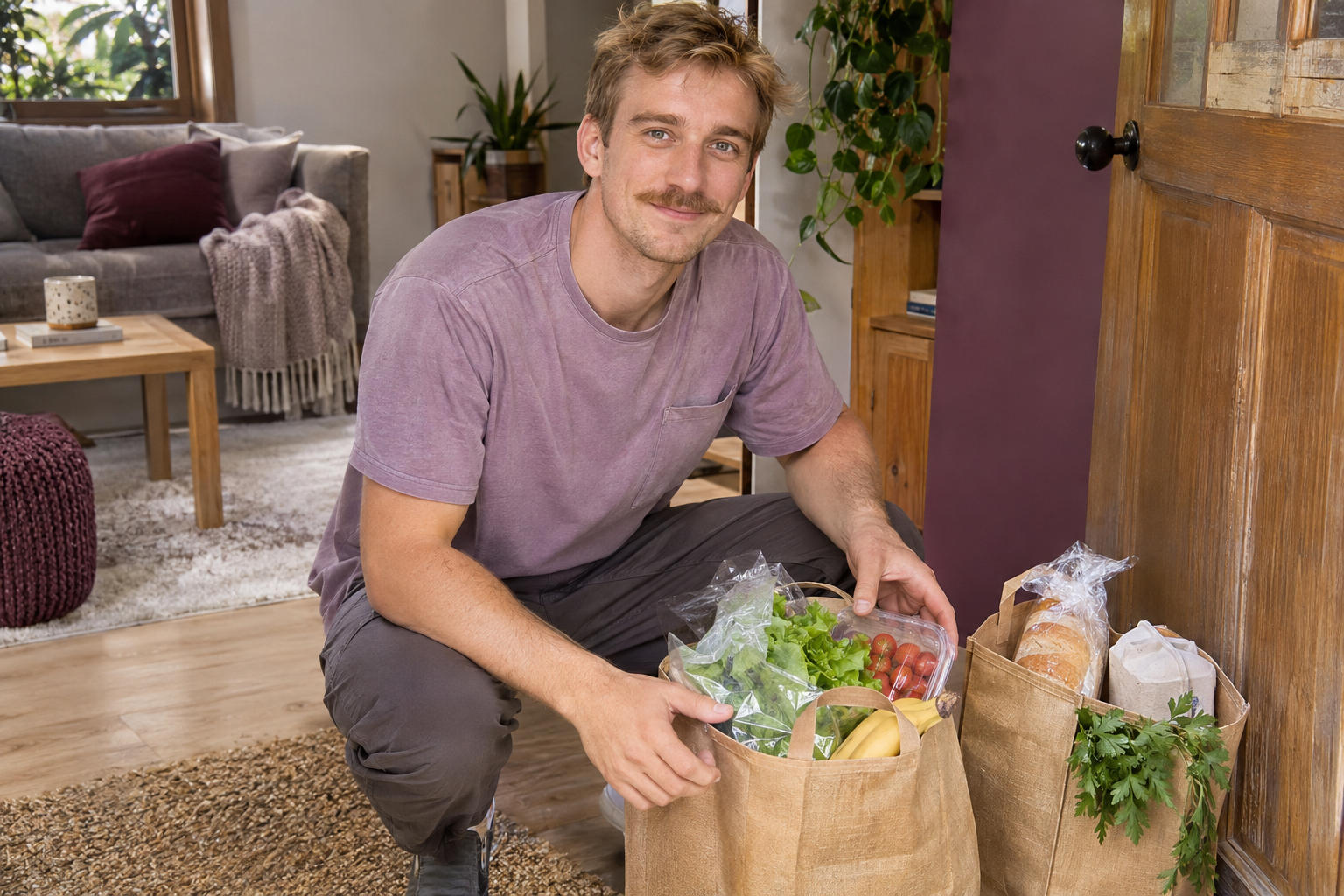
Grocery shopping includes a surprising number of jobs: planning, traveling, walking, choosing, waiting, carrying, and putting everything away. If you run out of energy before reaching the checkout, the problem may be the size of the task rather than your preparation.
Reduce the trip before you begin
Keep a short list of dependable meals and the ingredients they share. Arrange the list by store section if that makes it easier to follow. Choose a smaller shop or a quieter time when those options are accessible to you.
Delivery or pickup may help, but fees, substitutions, and availability matter. Ask a friend to pick up a few items during their own trip, share an order if practical, or use a store’s accessibility services. You do not need to justify choosing convenience when it fits your circumstances.
Plan for getting home
Use smaller bags and ask for carrying help where available. Put refrigerated and frozen foods away first; shelf-stable items can wait briefly while you rest. Keep pathways clear so bags do not become a fall hazard.
Use a prescribed mobility aid when needed; a shopping cart is not designed to replace one. If symptoms make shopping unsafe, stop and ask for assistance. A small shop that meets the next day’s needs can be a successful shop. There is no requirement to stock an entire week at once.