Category: Gentle Movement

  • Diaphragmatic Breathing Without Force or Promises

    Diaphragmatic Breathing Without Force or Promises

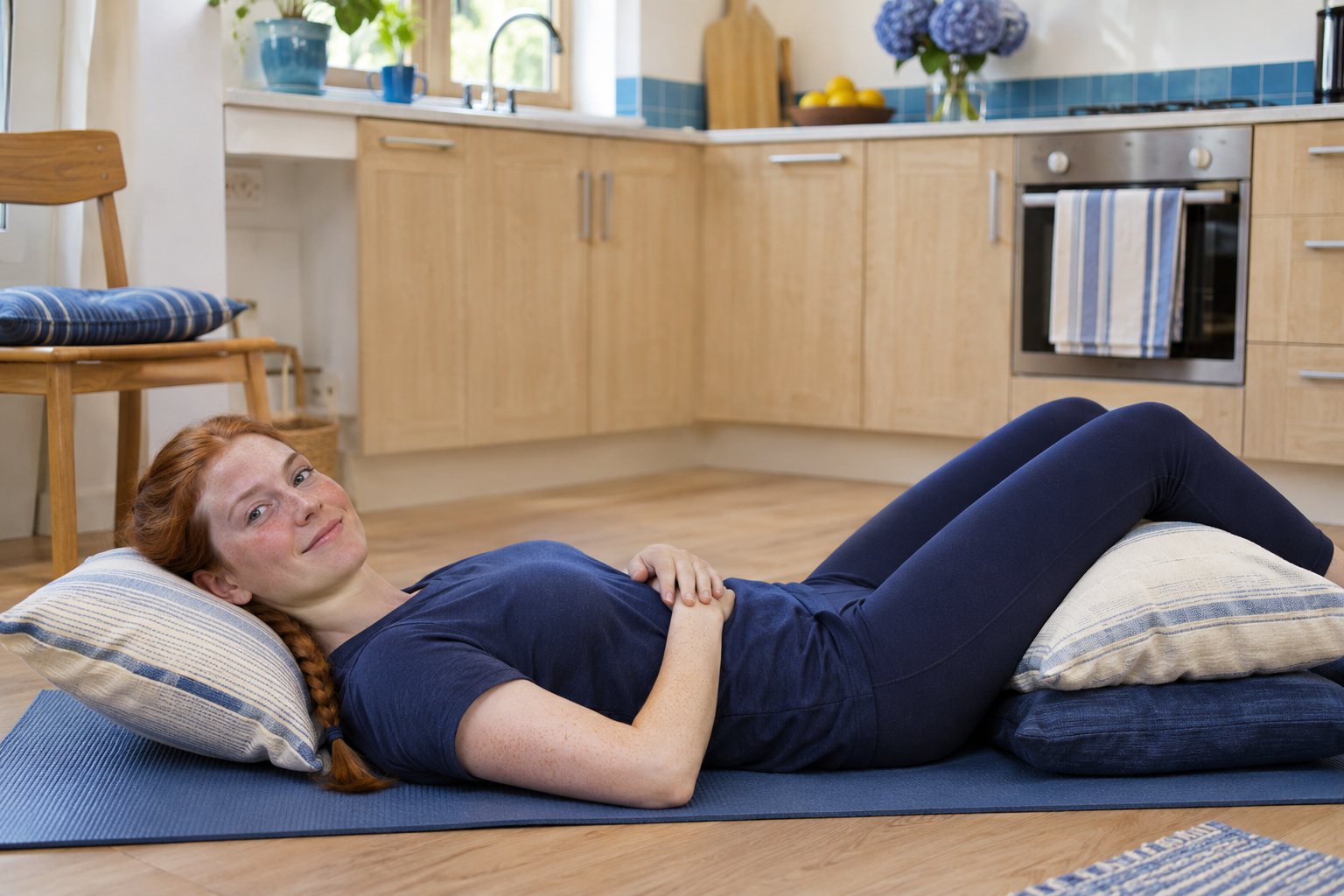
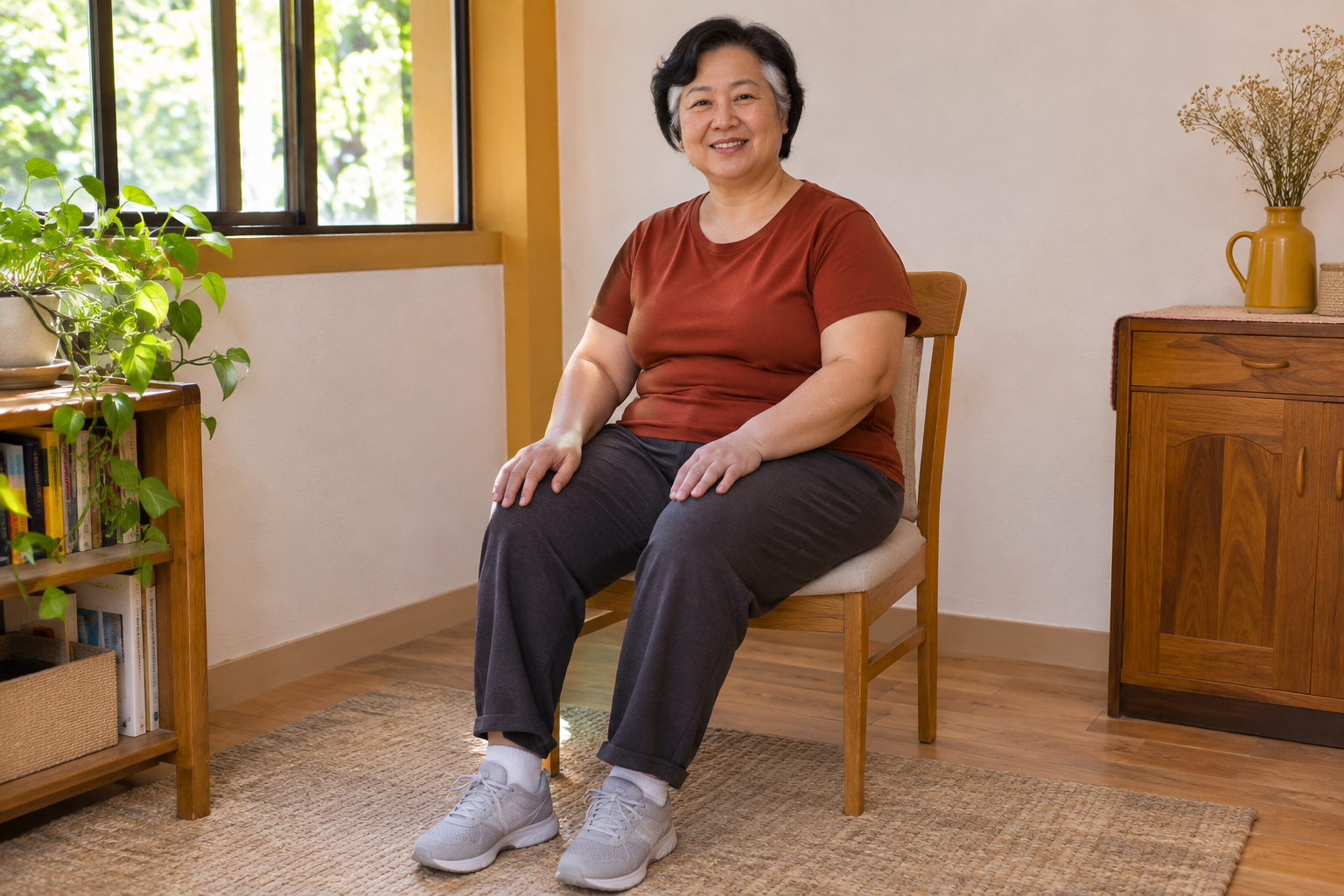
    Diaphragmatic breathing is often called belly breathing, but the name can make it sound as though you must push your abdomen outward or keep your chest completely still. A comfortable practice should not require force or leave you struggling for air.

    Begin with ease rather than technique

    If a clinician has recommended breathing practice, ask them to demonstrate a version that suits you. Sit with support or use another position they advise. Let the breath remain gentle; do not force large inhalations, prolonged exhalations, or breath holds.

    Stop if you feel dizzy, breathless, distressed, or uncomfortable. If you have reflux, lying flat after eating may be unsuitable. Breathing exercises are not a treatment for unexplained abdominal pain, persistent digestive symptoms, or a new breathing problem.

    Keep expectations realistic

    Some people use comfortable breathing as a relaxation practice. It does not need to improve digestion, switch off pain, or produce a measurable result to be an optional part of a quiet pause. The NCCIH relaxation guidance discusses the limits of these approaches.

    If attention to breathing makes you uncomfortable, choose an external focus instead, such as music or a view through the window. You are allowed to prefer a different kind of rest. A supportive routine should offer choices rather than make you feel responsible for controlling every bodily process.
  • Bedtime Hip Comfort Without Deep Stretching

    Bedtime Hip Comfort Without Deep Stretching

    Hip stretches are often pictured as a soothing bedtime ritual, but a deep pose can be uncomfortable or inappropriate when you have joint instability, injury, surgery restrictions, or persistent pain. Your body does not need to match the shape in a photograph to deserve relief.

    Choose comfort before range

    If stretching is part of your care plan, ask your physiotherapist which positions are suitable and how to support them. A small range with pillows may be more appropriate than letting the legs fall widely apart or pulling a knee toward you.

    Avoid bouncing, forcing the joint, or asking someone else to press you deeper into a pose. Stop with pain, pinching, tingling, numbness, or other concerning symptoms. New or worsening hip pain deserves assessment rather than a more intense stretching routine.

    Make bedtime less demanding

    You might simply adjust pillows, change position, or rest in a way that feels comfortable. A practice that leaves you sore afterward is worth reconsidering, even if it seemed gentle at the time. There is no required hold time and no need to increase flexibility as part of winding down.

    If a particular pose is not right for you, leaving it out is a useful decision. Bedtime can be a transition toward fewer demands. It does not have to become the final exercise session of a day that has already asked a great deal of you.

  • POTS and Small Leg Movements: Support Without Pushing Through

    POTS and Small Leg Movements: Support Without Pushing Through

    Standing still can be particularly difficult for some people with POTS. Small leg movements or other physical strategies may be included in an individualized plan, but they are not a guarantee against blood pooling, dizziness, or fainting.

    Get advice that fits the situation

    Ask your clinician which strategies are appropriate for you and when to use them. Joint problems, pain, balance, and other conditions can affect the choice. A movement that is safe while seated may not be safe while you are already unsteady in a queue.

    If you feel faint, prioritize getting to a safe seated or lying position and following your care plan. Do not keep standing and exercising your legs in an effort to prove you can manage. Ask for help and avoid situations where a fall would be especially dangerous.

    Change the environment as well

    Request seating, reduce unnecessary standing, or use an appropriate mobility aid if recommended. Arrange tasks so you can sit before symptoms build rather than treating every episode as a test of your coping skills.

    The Johns Hopkins POTS overview describes a range of individualized treatment approaches. Movement is only one possible piece of that care. You deserve accommodations and medical support, not just instructions to make more adjustments with your own body while the demands around you stay the same.

  • Reclined Movement and POTS: Finding an Individual Starting Point

    Reclined Movement and POTS: Finding an Individual Starting Point

    If standing brings dizziness or a racing heart, movement advice can feel as though it was written for somebody else. Reclined or seated activity may be part of an individualized POTS plan, but being horizontal does not make an activity effortless or suitable for everyone.

    Begin with the right support

    Ask a clinician or physiotherapist familiar with your condition what is appropriate for you, especially if you also experience post-exertional malaise, joint instability, or significant pain. Johns Hopkins’ POTS guidance emphasizes treatment tailored to the individual.

    If you have already been given a movement plan, arrange a supported position and an easy way to stop. Getting down to the floor and back up may be more demanding than the activity itself; a suitable bed or other clinician-approved setup may be more accessible.

    Notice the whole response

    Do not judge tolerance only by your heart rate or how you feel during a session. Pay attention to later symptoms and share changes with your care team. Avoid increasing activity automatically because a calendar or online program says it is time.

    On a difficult day, comfortable positioning may be all you choose. You are not missing an opportunity by resting. Movement is one possible part of care, and it should fit your health and your goals rather than become another obligation to prove you are trying.

  • Legs Up the Wall: Choosing Comfort Over the Pose

    Legs Up the Wall: Choosing Comfort Over the Pose

    “Legs up the wall” is often shown as a universally soothing yoga pose. In real life, getting into position may strain your hips or back, and having your legs elevated may not feel good at all. Restorative should describe your experience, not just the name of a pose.

    Choose support over the photograph

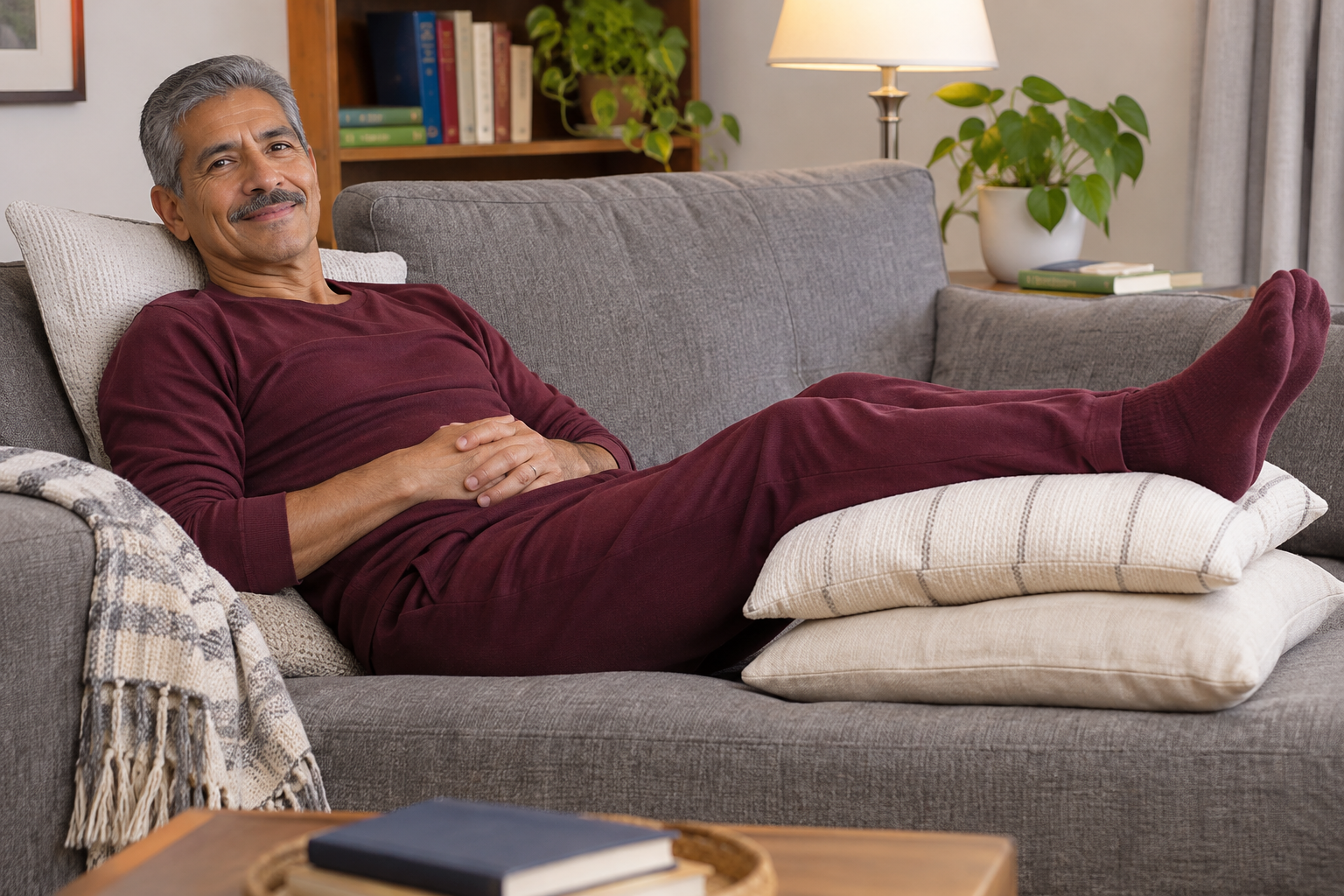
    If leg elevation is appropriate for you, ask your clinician or physiotherapist about a comfortable version. Resting your calves on a suitable cushion may be easier than placing your legs vertically against a wall. Avoid arrangements that create pressure, numbness, painful stretching, or a difficult exit.

    There is no need to stay for a fixed number of minutes or to reach a particular angle. People with certain medical conditions, recent procedures, or movement restrictions may need to avoid this position entirely. Stop if you feel unwell, and do not use a pose to manage new or unexplained symptoms.

    Let bedtime be flexible

    You might prefer lying on your side with support, sitting quietly, or listening to something familiar. A comfortable alternative is not a lesser version of the routine.

    The purpose of a bedtime practice can simply be to reduce demands for a moment. It does not have to lower your heart rate, improve circulation, or guarantee sleep. You are allowed to leave the yoga pose out and keep the part that matters: giving yourself a gentler transition toward rest.

  • Seated Lower-Body Mobility Within Your Limits

    Seated Lower-Body Mobility Within Your Limits

    Seated movement may sound automatically easy, but stiffness, pain, and fatigue can make even a small motion demanding. The useful question is not how many repetitions you should complete. It is whether a particular movement is appropriate and comfortable for you today.

    Begin with a stable position

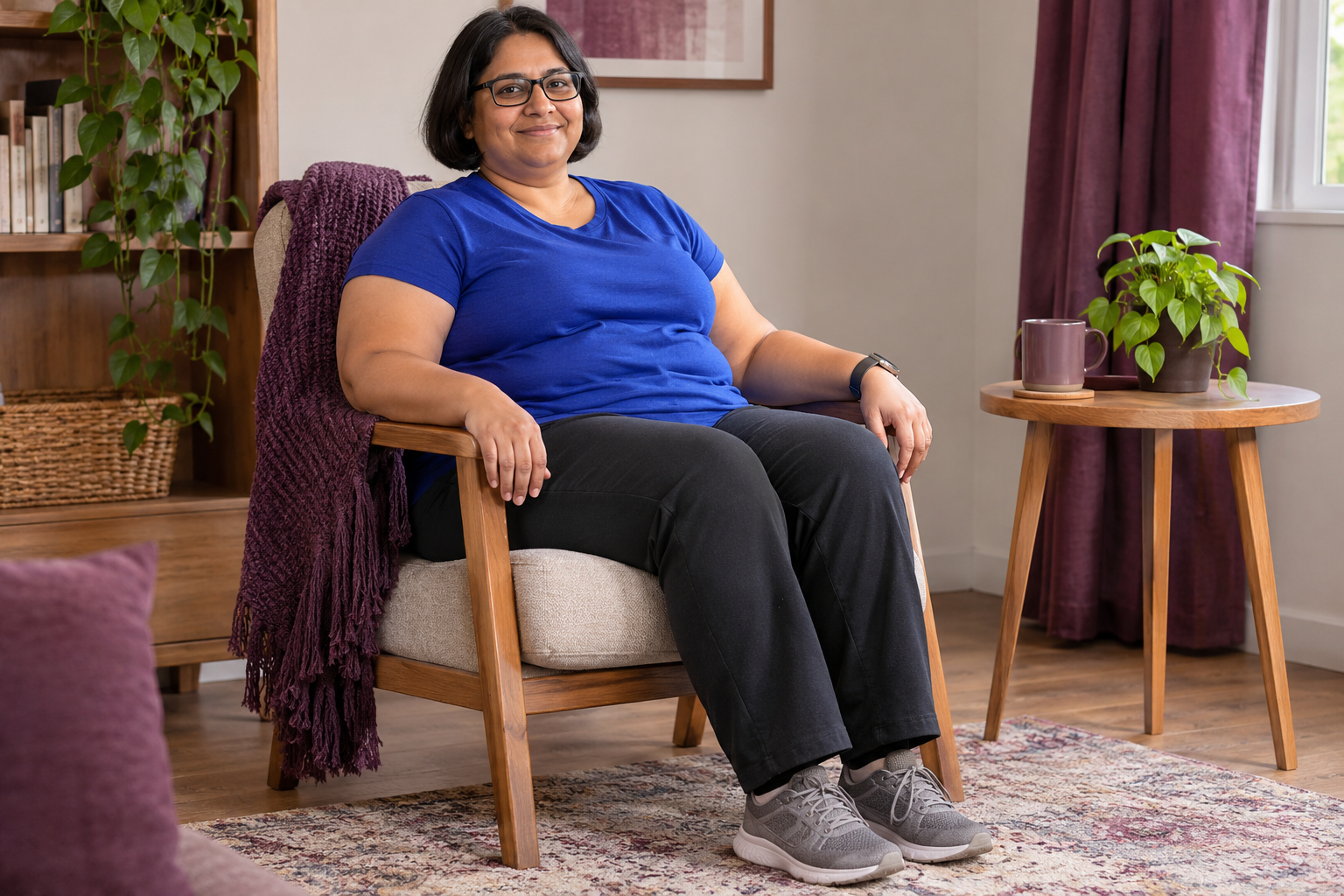
    Use a suitable chair that does not roll away, with your feet supported and enough space around you. If you have been given a mobility plan, follow that guidance. Small ankle or knee movements may be part of some plans, but joint problems, recent surgery, and neurological conditions can change what is suitable.

    Avoid bouncing, forcing a range, or pulling yourself into a position. Stop with sharp pain, new swelling, dizziness, numbness, or another concerning symptom. A clinician or physiotherapist can help distinguish ordinary stiffness from something that needs a different approach.

    Count recovery as part of the activity

    Notice how you feel afterward, including later in the day or the following day if symptoms can be delayed. There is no obligation to increase the amount each week or to match someone else’s routine.

    Sometimes adjusting the seat, supporting a leg, or taking pressure off a sore area is more useful than moving it. You can choose rest without losing your chance to care for yourself. A movement plan should make room for changing capacity, not require you to override it.