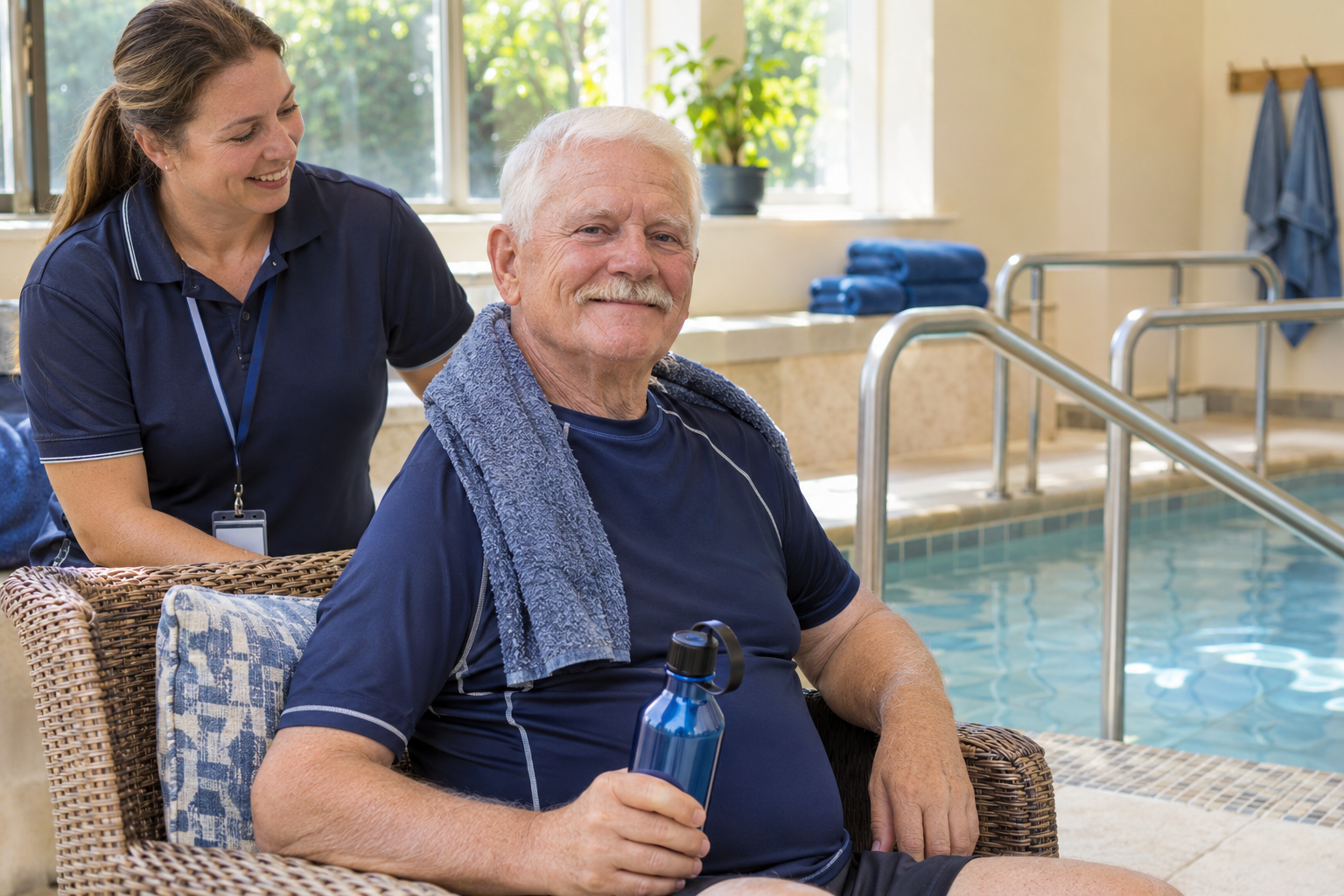
Water can feel appealing when movement on land is uncomfortable, but a warm pool is not automatically an easy or safe environment. The changing room, temperature, entry steps, and trip home all belong in the decision.
Ask about the whole experience
If you are considering hydrotherapy, speak with your care team about whether it suits your condition. A supervised therapeutic session differs from floating alone in a public pool. Ask about water temperature, accessible entry, seating, staff support, and how you would get out promptly if you became unwell.
Heat may aggravate dizziness or autonomic symptoms. Do not enter water alone if fainting or sudden weakness is a risk, and do not assume a flotation aid replaces supervision. Wounds, infections, recent procedures, and some medical conditions may also change whether pool use is appropriate.
Keep the first commitment small
If your clinician supports trying it, plan within the limits you agree on rather than joining a demanding class. Include travel, showering, dressing, and later recovery in your assessment of the effort involved.
If a pool is inaccessible, unaffordable, or simply unpleasant, you are not missing an essential path to improvement. Ask about alternatives that fit your actual circumstances. The best care option is not the one that sounds most soothing in an advertisement; it is one that is appropriate, accessible, and responsive to you.