Tag: Restorative Yoga

  • Legs Up the Wall: Choosing Comfort Over the Pose

    Legs Up the Wall: Choosing Comfort Over the Pose

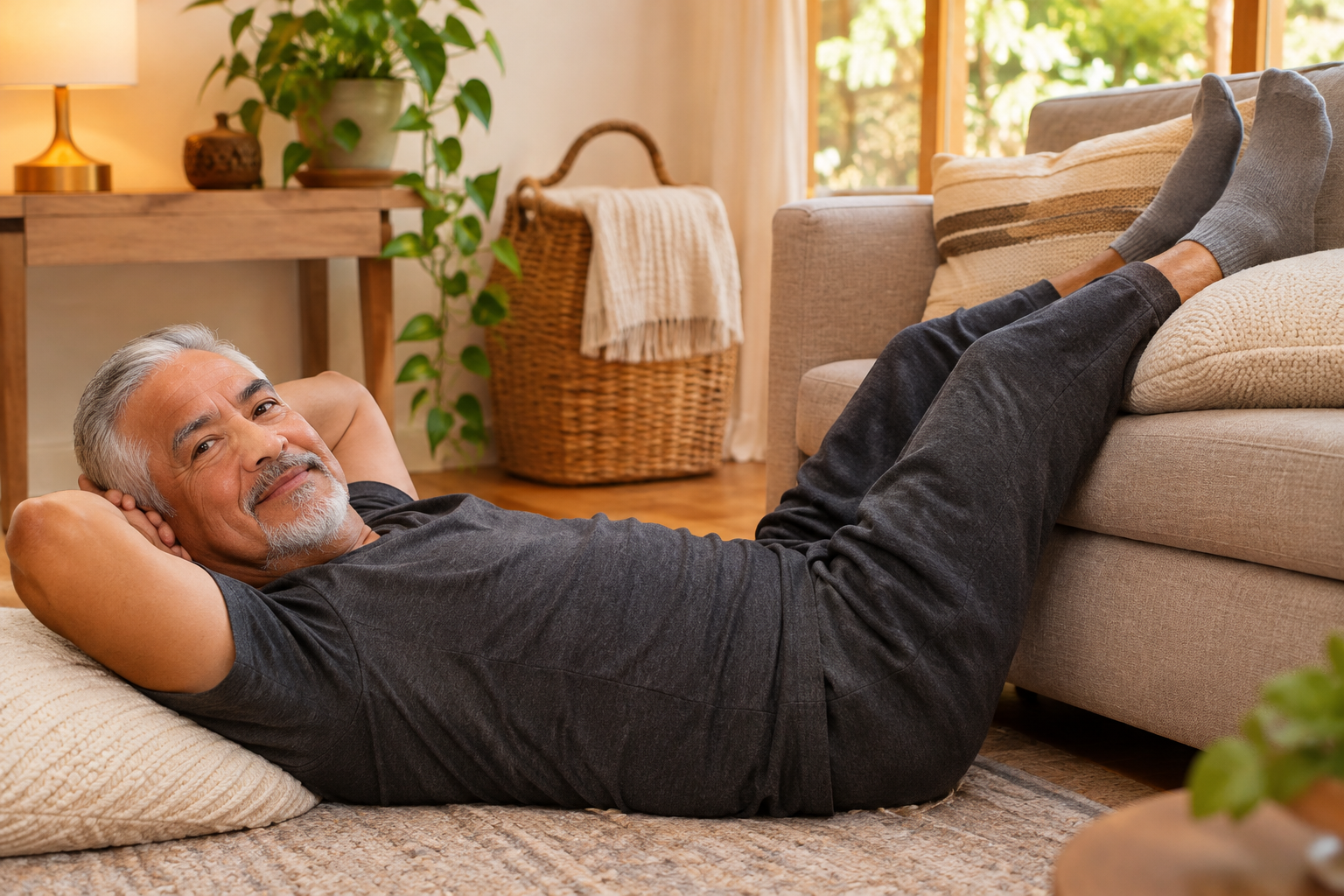
    “Legs up the wall” is often shown as a universally soothing yoga pose. In real life, getting into position may strain your hips or back, and having your legs elevated may not feel good at all. Restorative should describe your experience, not just the name of a pose.

    Choose support over the photograph

    If leg elevation is appropriate for you, ask your clinician or physiotherapist about a comfortable version. Resting your calves on a suitable cushion may be easier than placing your legs vertically against a wall. Avoid arrangements that create pressure, numbness, painful stretching, or a difficult exit.

    There is no need to stay for a fixed number of minutes or to reach a particular angle. People with certain medical conditions, recent procedures, or movement restrictions may need to avoid this position entirely. Stop if you feel unwell, and do not use a pose to manage new or unexplained symptoms.

    Let bedtime be flexible

    You might prefer lying on your side with support, sitting quietly, or listening to something familiar. A comfortable alternative is not a lesser version of the routine.

    The purpose of a bedtime practice can simply be to reduce demands for a moment. It does not have to lower your heart rate, improve circulation, or guarantee sleep. You are allowed to leave the yoga pose out and keep the part that matters: giving yourself a gentler transition toward rest.
  • Bedtime Hip Comfort Without Deep Stretching

    Bedtime Hip Comfort Without Deep Stretching

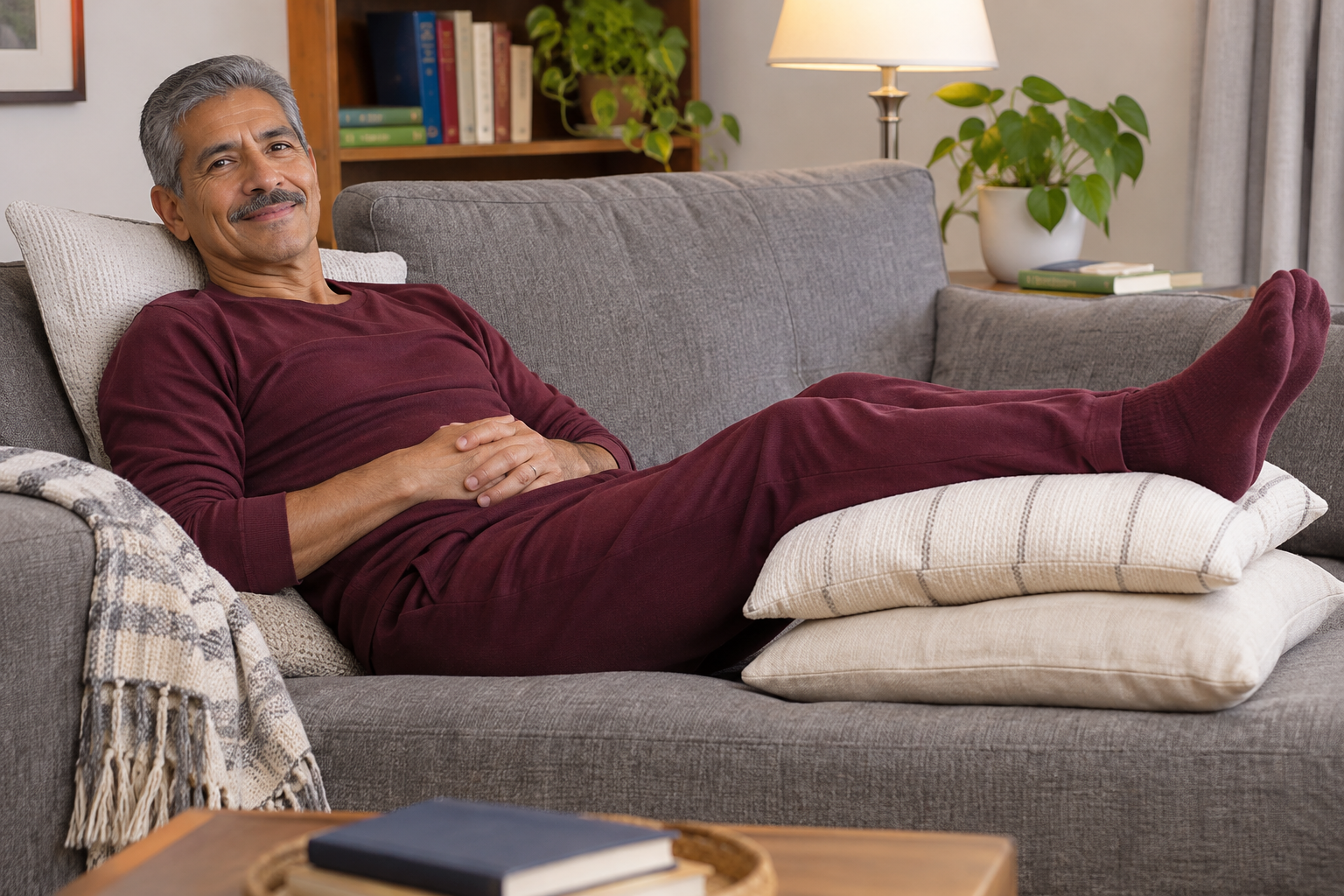
    Hip stretches are often pictured as a soothing bedtime ritual, but a deep pose can be uncomfortable or inappropriate when you have joint instability, injury, surgery restrictions, or persistent pain. Your body does not need to match the shape in a photograph to deserve relief.

    Choose comfort before range

    If stretching is part of your care plan, ask your physiotherapist which positions are suitable and how to support them. A small range with pillows may be more appropriate than letting the legs fall widely apart or pulling a knee toward you.

    Avoid bouncing, forcing the joint, or asking someone else to press you deeper into a pose. Stop with pain, pinching, tingling, numbness, or other concerning symptoms. New or worsening hip pain deserves assessment rather than a more intense stretching routine.

    Make bedtime less demanding

    You might simply adjust pillows, change position, or rest in a way that feels comfortable. A practice that leaves you sore afterward is worth reconsidering, even if it seemed gentle at the time. There is no required hold time and no need to increase flexibility as part of winding down.

    If a particular pose is not right for you, leaving it out is a useful decision. Bedtime can be a transition toward fewer demands. It does not have to become the final exercise session of a day that has already asked a great deal of you.