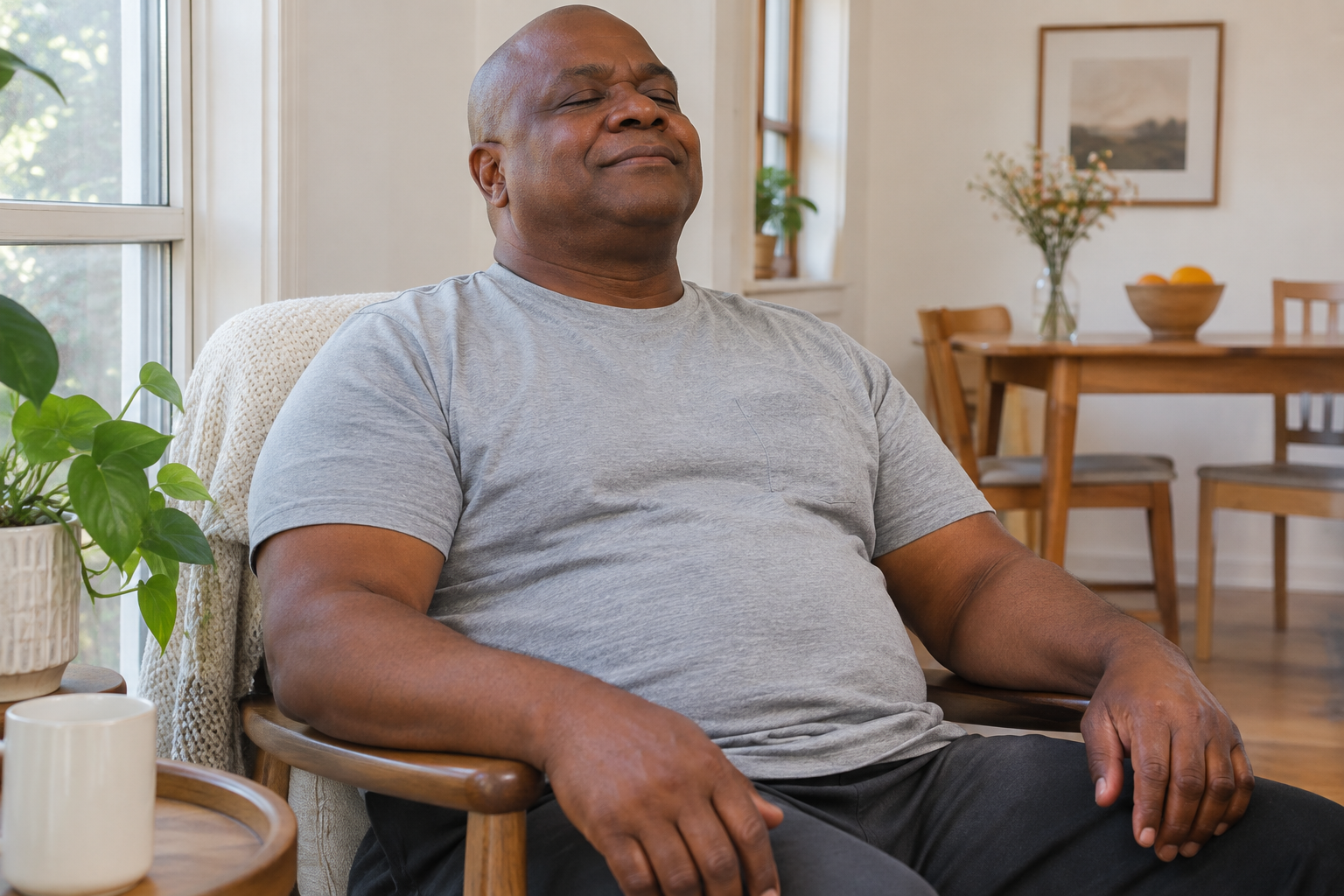
Tag: Rest

  • Comfortable Breathing: An Alternative to Forcing the 4-7-8 Pattern

    Comfortable Breathing: An Alternative to Forcing the 4-7-8 Pattern

    Breathing exercises are often presented as a quick way to switch off distress. That promise can be discouraging when counting makes you tense or holding your breath leaves you lightheaded. A useful practice should feel optional and comfortable, not like a test you have to pass.

    You can skip the breath hold

    The popular 4-7-8 pattern includes a prolonged hold and a controlled exhale. It is not necessary to use that pattern to take a quiet pause. Sit or recline with support and allow your breathing to remain easy and natural. If counting helps, keep it gentle without forcing a bigger breath or a slower rhythm.

    Stop if you feel dizzy, breathless, uncomfortable, or more anxious. Looking at an object in the room may suit you better than concentrating on internal sensations. The NCCIH overview of relaxation techniques discusses their potential uses and limits; they do not replace medical care.

    Keep the aim modest

    Perhaps the pause gives you a moment before answering a message or asking for help. That is enough. It does not need to “reset” your nervous system or make pain disappear.

    If you have breathing or heart problems, ask your clinician about techniques appropriate for you. New or concerning symptoms need assessment rather than repeated breathwork. You are allowed to choose a different form of comfort, including one that involves no exercise at all.


  • Unlearning Guilt Around Rest Days

    Unlearning Guilt Around Rest Days

    Rest can feel surprisingly difficult when you have learned to measure a good day by what you finish. Even lying down may become crowded with thoughts about messages, laundry, work, and all the things you believe you should be doing instead.

    Notice the rule behind the guilt

    Ask yourself what you are being told internally: “Rest is only allowed after everything is done,” or “Other people need me, so my needs must wait.” Those rules may be familiar without being fair or workable.

    Try replacing the rule with a practical statement: “My body needs a pause, and the list will still be there afterward.” You do not have to feel convinced immediately. A kinder sentence can be something you practice rather than something you already believe.

    Let rest be ordinary

    Choose a place where you can settle and reduce one demand if possible. Put the task list out of view, ask someone else to answer the door, or leave a message saying you will respond later. Rest does not need to be aesthetically pleasing or optimally restorative.

    You may still feel frustrated, bored, or sad while resting. Those feelings do not cancel its legitimacy. If guilt is persistent or tangled with anxiety, a supportive therapist may help you explore it. You do not need to become perfectly accepting of illness before you are allowed to care for yourself.

  • Diaphragmatic Breathing Without Force or Promises

    Diaphragmatic Breathing Without Force or Promises

    Diaphragmatic breathing is often called belly breathing, but the name can make it sound as though you must push your abdomen outward or keep your chest completely still. A comfortable practice should not require force or leave you struggling for air.

    Begin with ease rather than technique

    If a clinician has recommended breathing practice, ask them to demonstrate a version that suits you. Sit with support or use another position they advise. Let the breath remain gentle; do not force large inhalations, prolonged exhalations, or breath holds.

    Stop if you feel dizzy, breathless, distressed, or uncomfortable. If you have reflux, lying flat after eating may be unsuitable. Breathing exercises are not a treatment for unexplained abdominal pain, persistent digestive symptoms, or a new breathing problem.

    Keep expectations realistic

    Some people use comfortable breathing as a relaxation practice. It does not need to improve digestion, switch off pain, or produce a measurable result to be an optional part of a quiet pause. The NCCIH relaxation guidance discusses the limits of these approaches.

    If attention to breathing makes you uncomfortable, choose an external focus instead, such as music or a view through the window. You are allowed to prefer a different kind of rest. A supportive routine should offer choices rather than make you feel responsible for controlling every bodily process.