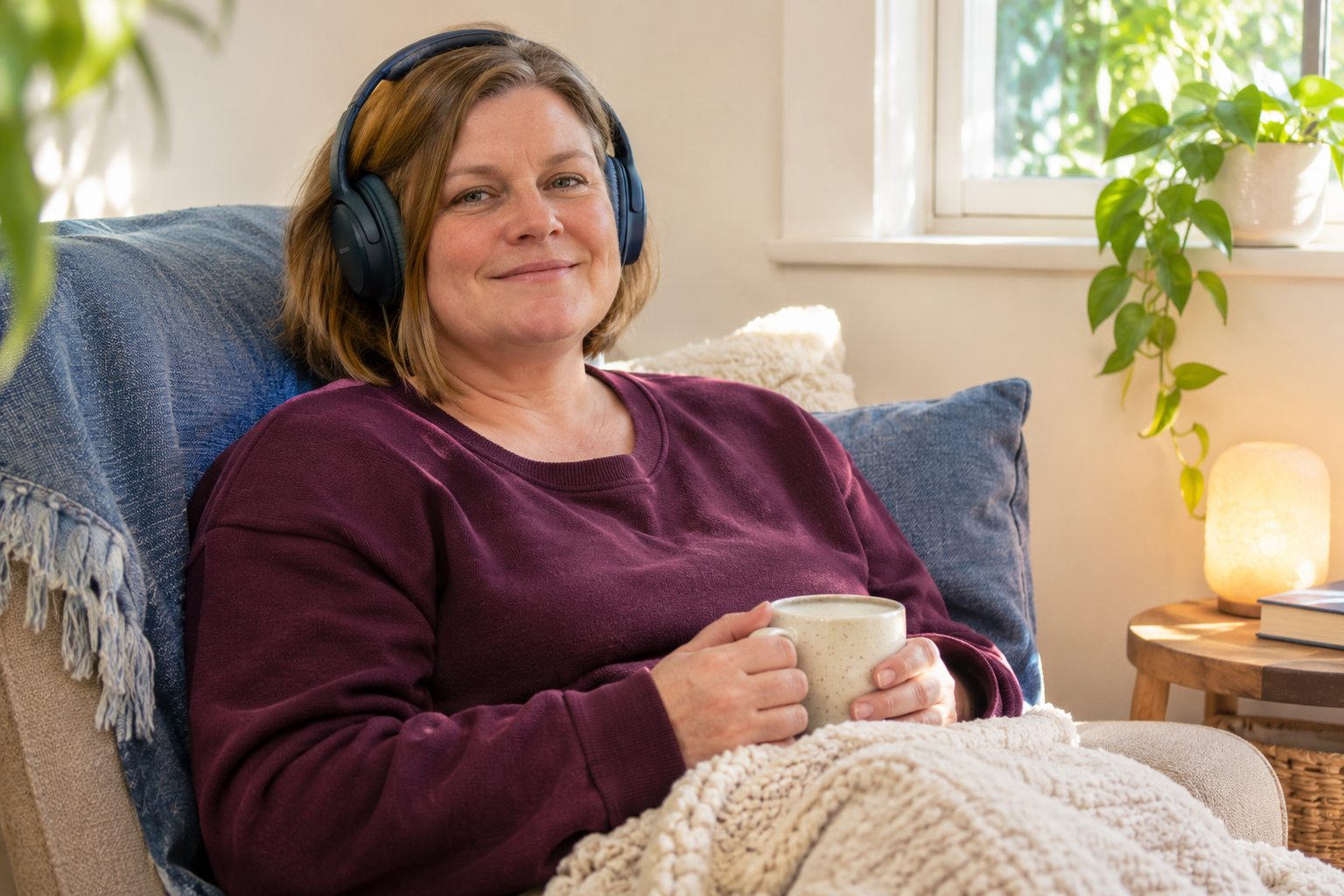
Sometimes the most appealing form of self-care is less: less light, less noise, fewer decisions, and nobody asking what comes next. A low-stimulation space can give you somewhere to pause without requiring a complete redesign of your home.
Build around one comfortable place
Choose a chair, bed, or sofa you already use. Add only what makes settling easier: a pillow, a familiar blanket, water within reach, or a way to adjust the light. Keep the route clear and avoid adding objects that create more tidying or reaching.
Consider scent as well as sound and brightness. An unscented space may be more comfortable than candles or diffusers, especially when migraine, nausea, or respiratory sensitivity is present. Soft music is optional; silence is optional too.
Tell others what the space means
If you share a home, agree on a simple signal for a quiet interval. You might ask for messages instead of being called across the room, while keeping important alarms and caregiving needs in mind. A sanctuary does not have to mean being unreachable.
The space may help you feel more settled without changing the underlying symptoms. That still has value. If you cannot create a separate corner, one small adjustment—a dimmer lamp, a closed door, or a softer layer—can be enough for today. You do not need a picture-perfect room to deserve quiet.