
Tag: Mind Body

  • Somatic Tracking: Questions, Boundaries, and Support

    Somatic Tracking: Questions, Boundaries, and Support

    You may have encountered somatic tracking described as a way to notice sensations with less fear. For some people, approaches involving attention and pain education are part of care. They should never require you to dismiss symptoms, assume every sensation is harmless, or believe that pain is your fault.

    Put assessment before reassurance

    Persistent, changing, or unexplained pain deserves medical evaluation. Different conditions need different treatment, and an online exercise cannot establish that a sensation is safe. If you are interested in somatic tracking, discuss it with a qualified clinician who understands your diagnosis and takes your symptoms seriously.

    Ask what the approach is intended to help with, what evidence supports it for your situation, and when to stop. You should be able to decline or modify an exercise without being told that reluctance is causing your illness.

    Keep attention flexible

    Focusing inward can be uncomfortable or distressing for some people. Looking around the room, listening to familiar audio, or simply changing the subject may feel better. You do not need to repeatedly scan your body or force yourself to feel reassured.

    Pain care can include emotional support without reducing physical illness to emotion. A compassionate approach leaves room for uncertainty, medical treatment, and your own observations. The goal is support that expands your options, not a new responsibility to think your way out of symptoms.
  • Guided Imagery as an Optional Comfort

    Guided Imagery as an Optional Comfort

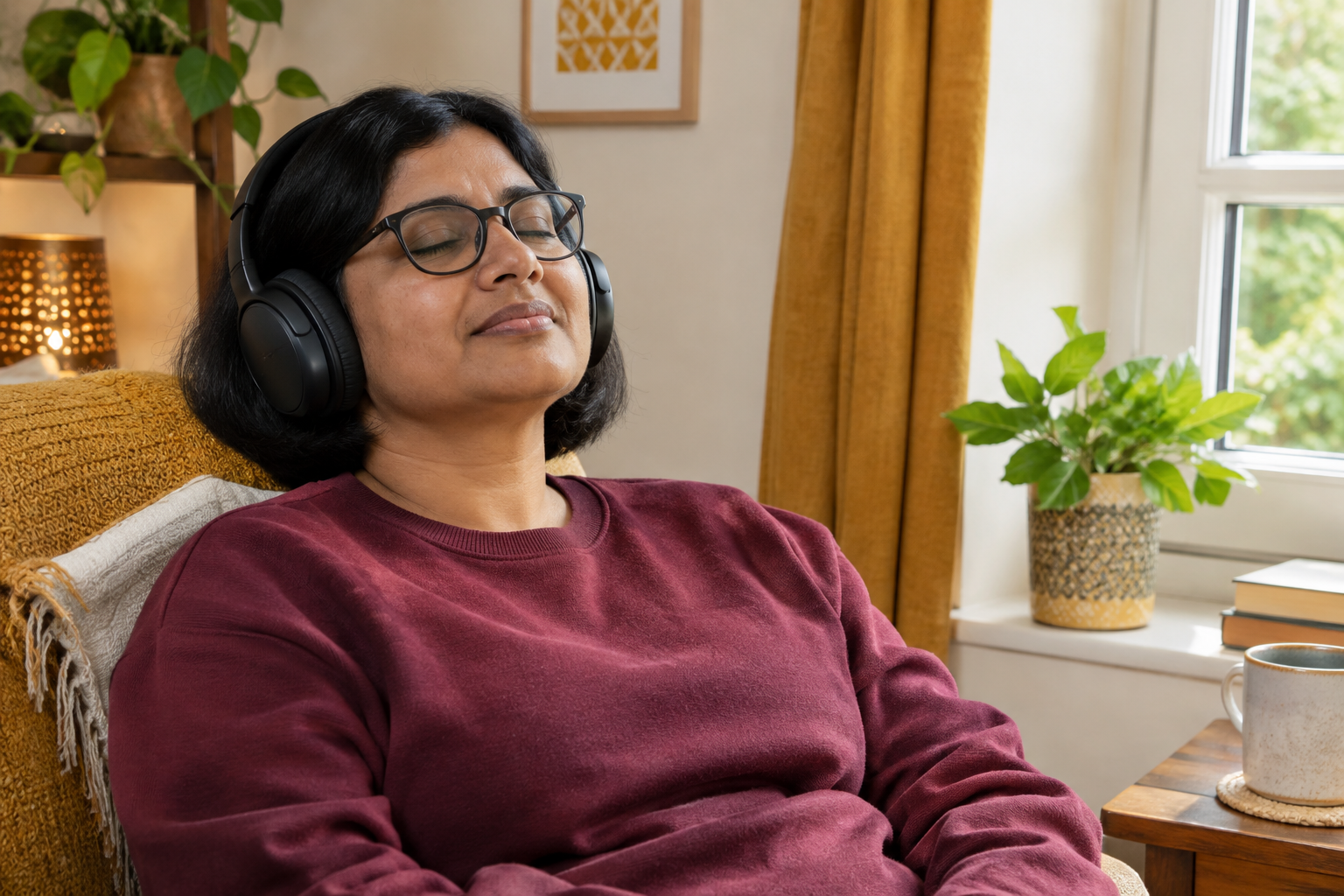
    Guided imagery invites you to imagine a place, scene, or experience that feels comfortable. It can be a quiet way to direct attention, but you do not need vivid mental pictures or a perfectly calm mind for the pause to be worthwhile.

    Choose something that feels welcoming

    You might think of a familiar room, the sound of rain, or the warmth of a mug in your hands. If visualization is difficult, focus on words, sounds, or a real object nearby. There is no correct image to produce.

    Keep your eyes open if you prefer, and choose an audio recording only if the voice and content suit you. Stop if the exercise brings distress, unwanted memories, or more discomfort. The NCCIH relaxation overview describes these practices as complementary approaches, with individual responses and limitations.

    Leave the outcome open

    You may feel a little more settled, feel unchanged, or decide it is not for you. None of those responses means you have done it badly. Avoid recordings that promise to cure illness or suggest that symptoms continue because you are not relaxing deeply enough.

    Keep medical care and prescribed treatment in place. Guided imagery can be a small optional comfort, like a familiar song or a quiet view. It does not have to become a daily assignment or another technique you must master.