
Tag: Joy

  • Finding Joy in the Quiet Life

    Finding Joy in the Quiet Life

    Living with chronic illness requires shifting to a quieter, slower pace of life. When high energy hobbies, busy social lives, and travel are no longer manageable, it can feel like your world has shrunk. However, a quieter life can still be rich with joy and meaning.

    Joy does not require constant physical action. It can be found in small, simple moments: a warm cup of tea, light coming through a window, a good book, or a quiet conversation with a close friend.

    Embracing a quiet life is not settling for less; it is learning to appreciate the peace and depth found in simple, everyday experiences.

    Gentle Management Tips

    • Create a daily "small joys" list to notice and appreciate simple positive moments.
    • Set up a quiet space in your home dedicated entirely to restful, comforting activities.
    • Explore low physical effort hobbies like reading, gentle sketching, podcast listening, or easy crafting.

    Let joy stay optional

    You do not have to feel grateful for illness or find something beautiful in every hard day. Sometimes a quiet life feels lonely or frustrating, and that is worth saying. A small pleasure can sit beside those feelings without canceling them out. Choose what actually feels good to you, even if it is different from someone else’s idea of a peaceful life.
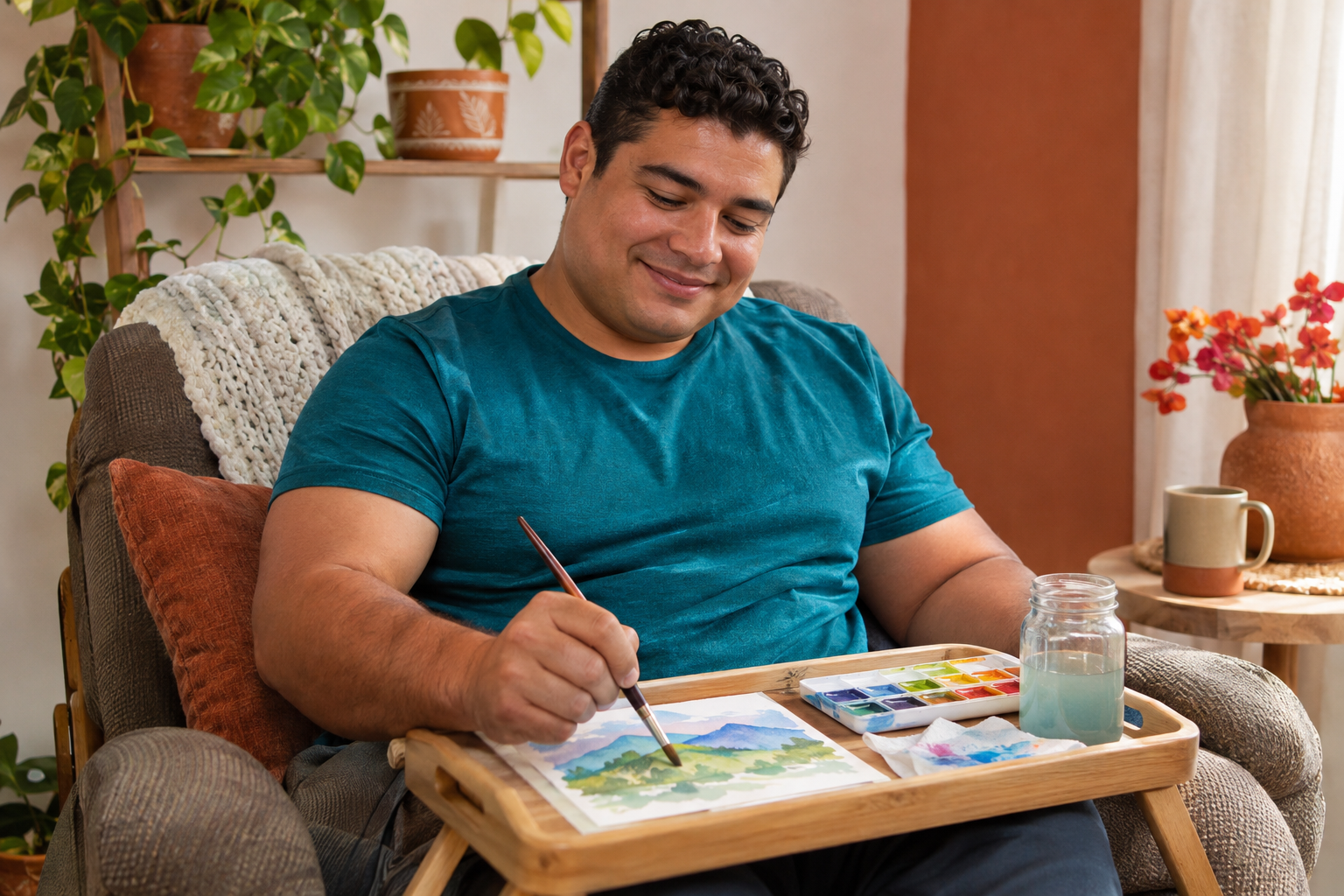
  • Finding Creative Joy in Low Energy Hobbies

    Finding Creative Joy in Low Energy Hobbies

    Illness can shrink the space available for hobbies, especially when an activity once involved long sessions, social plans, or supplies you can no longer manage easily. Creativity can return in a smaller form without needing to replace everything you miss.

    Choose the enjoyable part

    Maybe you love color more than finishing a painting, stories more than writing chapters, or the feel of yarn more than completing a blanket. Start there. Make one small sketch, record a sentence, choose a few photographs, or listen to a discussion about something that interests you.

    Keep materials easy to reach and easy to put down. A small project tray can help if getting everything out uses most of your energy. Choose safe storage for tools and supplies, especially if you share the space with children or pets.

    Remove the performance requirement

    You do not have to improve, share the result, or turn it into income. An unfinished project can still have given you a pleasant afternoon. Changing hobbies or returning to a beginner version of an old interest is allowed.

    If an activity aggravates symptoms, adjust the duration, method, or position, and consider individualized advice when needed. Rest can interrupt creativity without ending your relationship with it. A few minutes of interest may be meaningful, and a day without any creative activity is also a day on which you remain yourself.