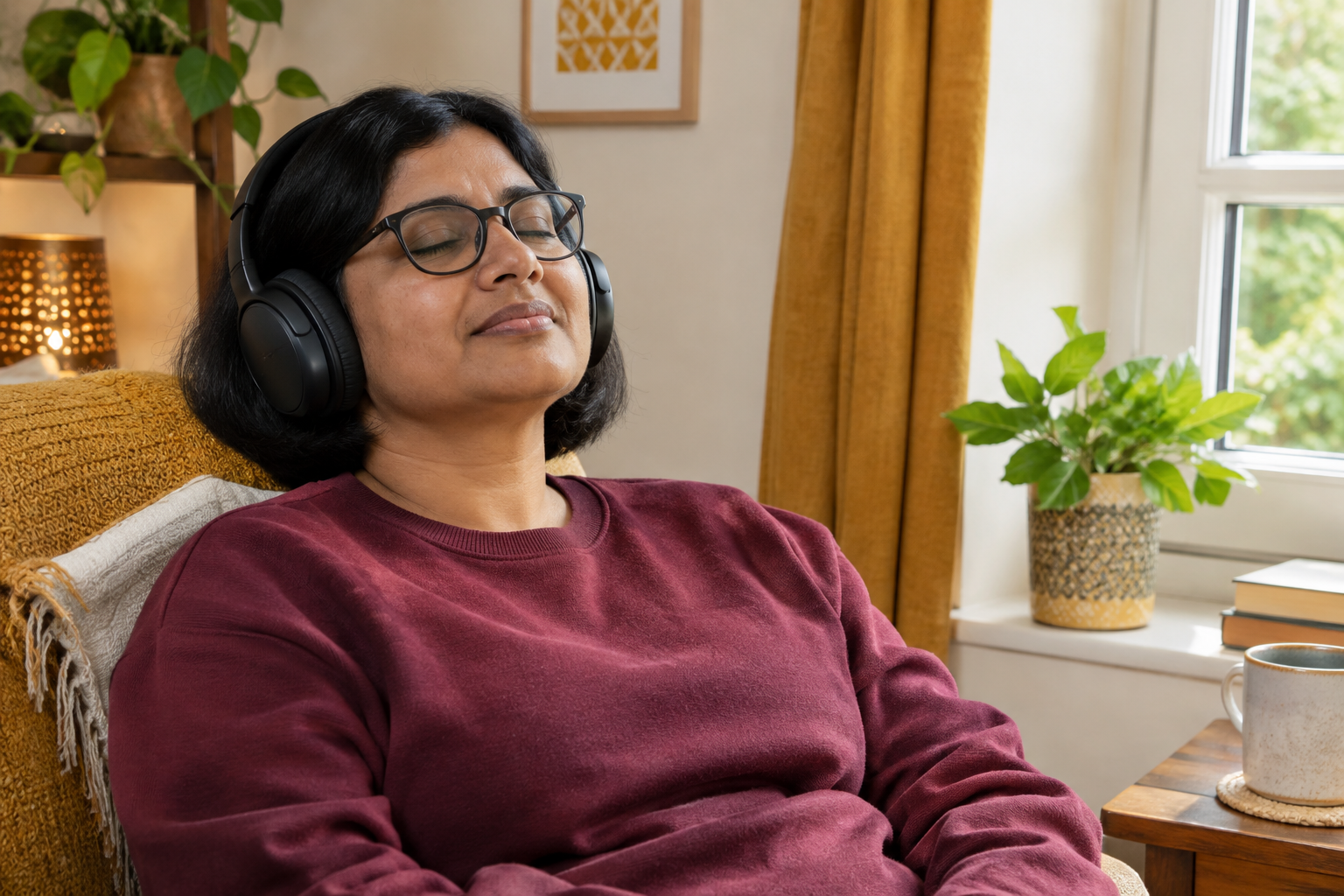
Guided imagery invites you to imagine a place, scene, or experience that feels comfortable. It can be a quiet way to direct attention, but you do not need vivid mental pictures or a perfectly calm mind for the pause to be worthwhile.
Choose something that feels welcoming
You might think of a familiar room, the sound of rain, or the warmth of a mug in your hands. If visualization is difficult, focus on words, sounds, or a real object nearby. There is no correct image to produce.
Keep your eyes open if you prefer, and choose an audio recording only if the voice and content suit you. Stop if the exercise brings distress, unwanted memories, or more discomfort. The NCCIH relaxation overview describes these practices as complementary approaches, with individual responses and limitations.
Leave the outcome open
You may feel a little more settled, feel unchanged, or decide it is not for you. None of those responses means you have done it badly. Avoid recordings that promise to cure illness or suggest that symptoms continue because you are not relaxing deeply enough.
Keep medical care and prescribed treatment in place. Guided imagery can be a small optional comfort, like a familiar song or a quiet view. It does not have to become a daily assignment or another technique you must master.