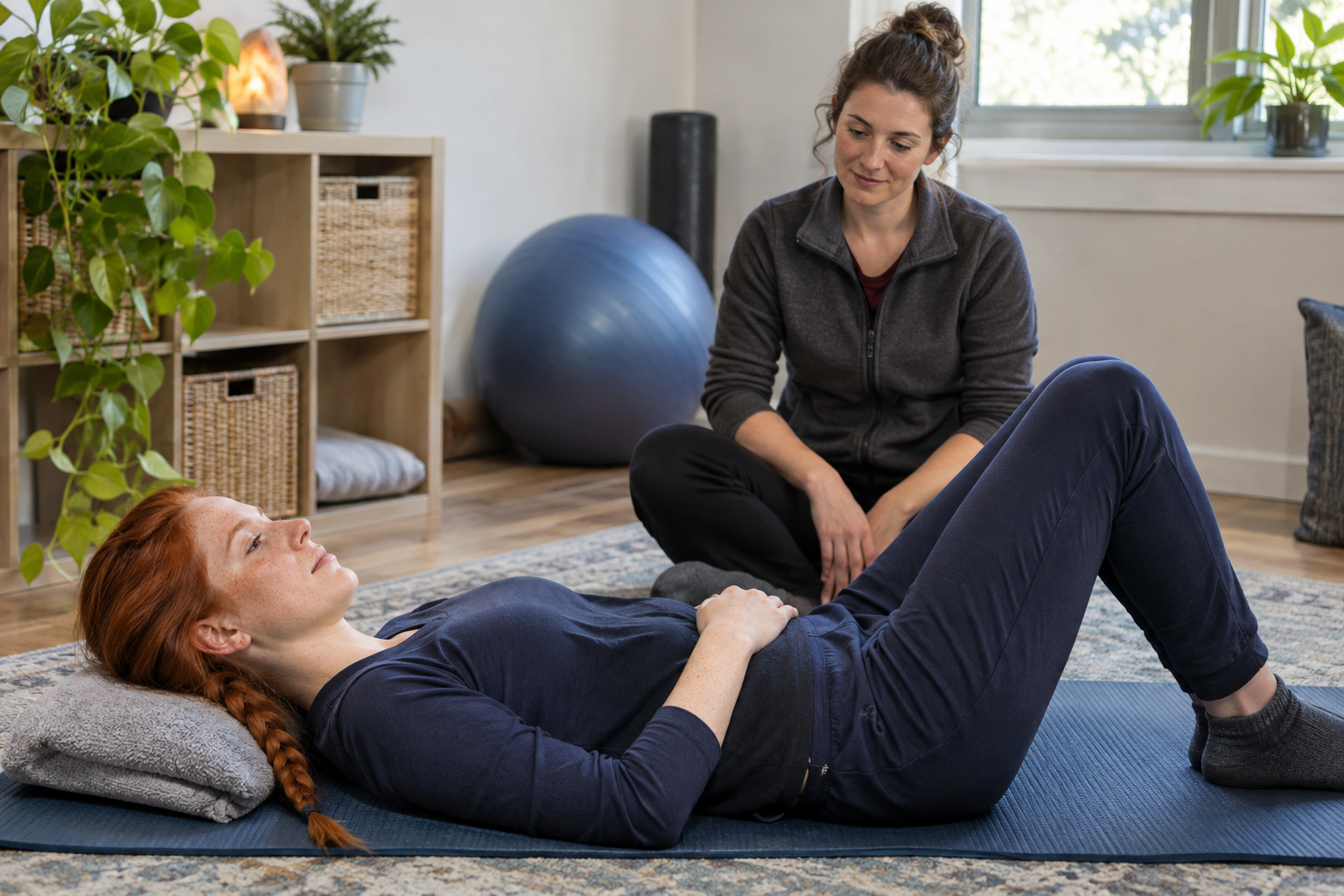
When standing activity brings dizziness or a racing heart, conventional exercise advice can feel far removed from daily life. You may want to move and also worry about what will happen afterward. Both feelings deserve room in the conversation.
Some people with POTS work with clinicians on seated or recumbent activity. Being closer to horizontal does not guarantee a stable heart rate or make every movement safe. A rowing machine is not the same as lying down, and floor transfers can be demanding in their own right.
Start with an individualized discussion
Ask what kinds of activity, if any, fit your symptoms and other conditions. Describe not only how you feel during movement but also what happens later. If you experience post-exertional malaise, that needs to shape the plan; a fixed progression that ignores delayed worsening is not appropriate.
There is no exercise list everyone with dysautonomia should complete. Your starting point may involve very little activity, support with transfers, or a period of reducing demands. You do not have to begin with bridges, leg lifts, or a particular machine.
Give yourself permission to stop
Follow the symptom guidance agreed with your healthcare team, and stop if you develop concerning symptoms. Keep a way to call for help and consider whether the setting is safe for you.
Movement should not become a test of determination. A useful plan respects your current capacity and can change when your body needs something different.
Further reading: Johns Hopkins: Individualized POTS care.
For activity-related symptom worsening, see CDC guidance on PEM and pacing.