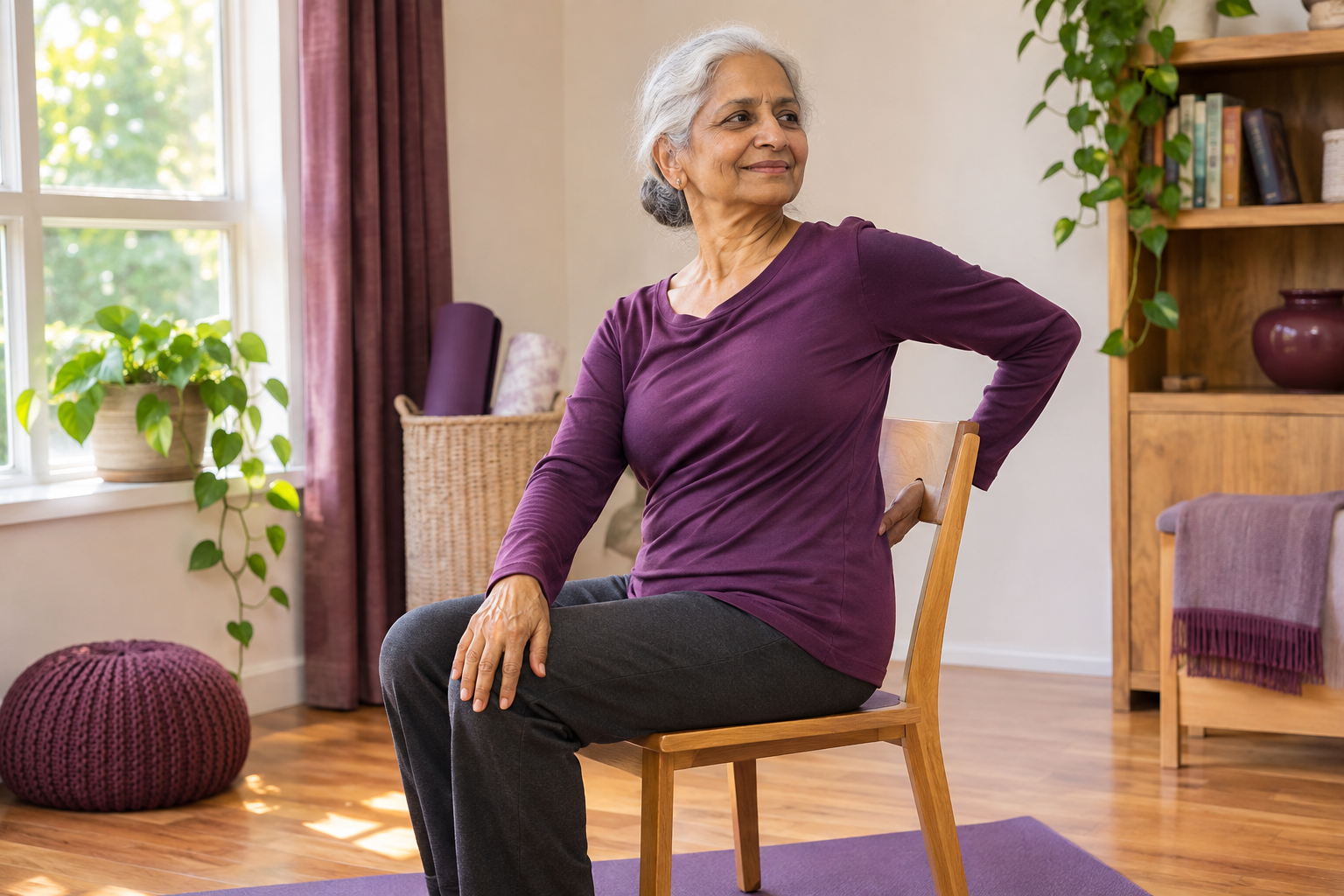
Chair yoga can make some movements more accessible, but the word “seated” does not make every sequence suitable for every person. A useful session should be adaptable enough that stopping, skipping a pose, or resting is an ordinary part of it.
Choose the setting carefully
Use a stable chair and enough clear space. If you have dizziness, pain, joint instability, recent surgery, or post-exertional symptoms, ask a qualified clinician what is appropriate before following a class. Let the instructor know about relevant limitations without feeling obliged to share your whole medical history.
Avoid deep forward folds, forceful twists, end-range stretches, or breath holds if they do not fit your care plan. An instructor should offer alternatives without pressuring you to achieve the photographed shape of a pose.
Let the smallest version count
Your session might involve sitting comfortably, noticing support, and trying one familiar movement. It may also involve deciding that today is not a movement day. Pay attention to later symptoms rather than judging success only by how the activity felt at the time.
Chair yoga does not have to produce energy, flexibility, or a particular emotional state to be worth considering, and it is fine if it is not useful for you. Accessibility includes the freedom to choose a different activity—or to rest—without being treated as though you have given up.