
Tag: Fibromyalgia

  • When Brain Fog Takes Your Mind Away

    When Brain Fog Takes Your Mind Away

    Brain fog can make familiar tasks feel strangely far away. A word disappears halfway through a sentence. You reread an email and still cannot hold onto the meaning. For someone used to being quick, organized, or reliable, these moments can feel personal even when they are symptoms.

    You do not need a technical explanation for every lapse to acknowledge its impact. Cognitive difficulties can have several contributors, so persistent or changing symptoms are worth discussing with your healthcare team rather than assuming they all belong to an existing diagnosis.

    Give your memory somewhere to land

    Choose one place for important information: a notebook, a phone note, or a shared calendar. Using several systems can create more searching. Write down the next small action rather than the whole project: "Reply to Sam about Thursday" may be easier to return to than "Sort out appointments."

    Make conversations easier

    You can say, "I need a moment to find the word," or ask someone to send the details in writing. Slowing down is allowed. If a task affects safety, such as driving, handling medication, or supervising a young child, pause and arrange help when your concentration is not reliable enough.

    A foggy day is not a verdict on your character or intelligence. It is a day that may need fewer demands, clearer reminders, and more support. You are still entitled to be included in the conversation while taking the time you need.

  • Understanding Fibromyalgia Flare Triggers

    Understanding Fibromyalgia Flare Triggers

    A fibromyalgia flare can make an already demanding day feel much smaller. Clothing may feel uncomfortable, sleep may be poor, and familiar tasks can require more effort. When a flare seems to arrive without warning, it is natural to search for a reason.

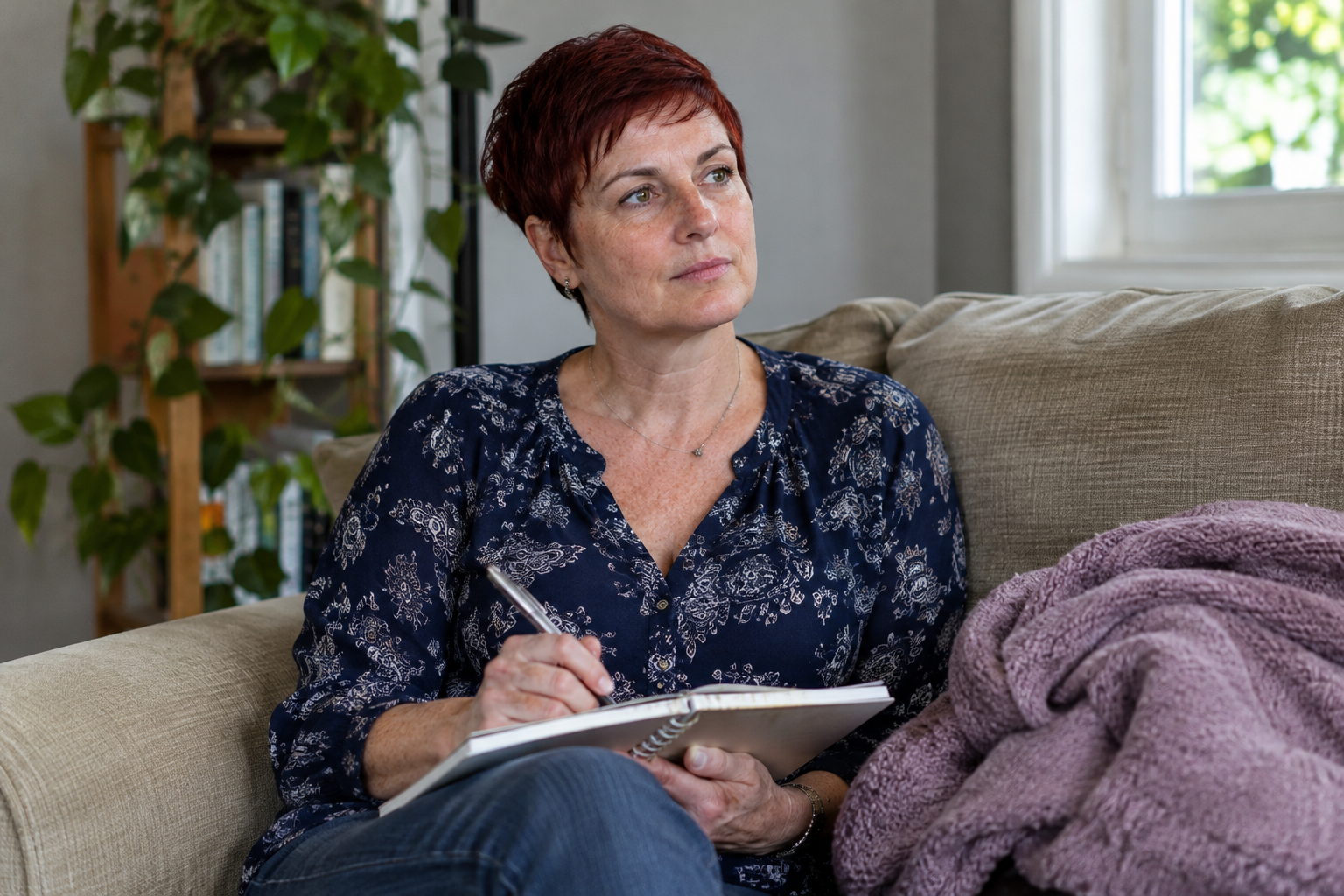
    Looking for patterns can be useful, but it should not become an investigation into what you did wrong. Symptoms can fluctuate even when you have been careful. A journal cannot explain every change, and it does not need to.

    Track only what helps

    If you want to keep notes, choose a few details: how sleep felt, what demands the day involved, and which symptoms affected your activities. Stop or simplify tracking if it increases anxiety or uses too much energy. Bring useful patterns to your healthcare team rather than treating a correlation as proof of a cause.

    Prepare comfort options in advance

    Keep familiar supplies accessible and discuss a flare plan with your clinician. That plan may include adapting activities, arranging help, and reviewing treatments that are appropriate for you. If you use warmth for comfort, follow product guidance and avoid overheating or burns; heat may be poorly tolerated with some other conditions.

    New, unusually severe, or different symptoms deserve assessment rather than automatically being labeled a flare. You can take established symptoms seriously while remaining open to other explanations.

    Your task is not to prevent every difficult day. It is to have support and a workable next step when one arrives.

    Further reading: NIAMS: Fibromyalgia care.

  • Sleep Hygiene Hacks for Fibromyalgia and Chronic Pain

    Sleep Hygiene Hacks for Fibromyalgia and Chronic Pain

    When pain interrupts sleep, bedtime can start to feel like another task you are failing. You may arrange the pillows, turn off the light, and still spend hours trying to find a tolerable position. Being tired enough to sleep and being able to sleep are not always the same thing.

    Aim for comfort, not a perfect routine

    A quieter environment, comfortable bedding, or a predictable wind-down may help you settle. Different people need different temperatures, positions, and amounts of support. A pillow that helps one person may worsen another person's discomfort, so adjust gently rather than forcing a recommended setup.

    Choose a small routine you can actually manage: putting essentials within reach, lowering the light, or listening to something familiar. It does not need to become an elaborate hour of tasks. Missing a routine on a difficult night is not the reason you are ill.

    Bring persistent sleep problems into your care

    Fibromyalgia treatment may involve addressing both pain and sleep. Tell your clinician what happens at night and how it affects the day. Ongoing sleep difficulties may need assessment beyond general sleep-hygiene advice, including a review of medicines or other contributing problems.

    Avoid changing medication doses or adding sleep products without checking what is appropriate for you. The aim is a plan that fits your actual situation.

    If you are awake tonight, you do not need to turn that into a judgment about yourself. You deserve support with sleep, not another set of rules to feel guilty about.

    Further reading: NIAMS: Fibromyalgia treatment and sleep.

  • Managing Fibromyalgia Flares When You Work From Home

    Managing Fibromyalgia Flares When You Work From Home

    Working from home removes the commute, but it does not remove fibromyalgia. A familiar desk can still feel unbearable during a flare, and an ordinary email can take more concentration than you have available. You deserve a plan that acknowledges that reality.

    Decide what actually needs today

    Before opening every message, identify one essential responsibility. Can it be postponed, simplified, or handed over? Write down the next small step so you do not have to keep the whole project in your head. An urgent-looking inbox is not always an accurate picture of your priorities.

    Prepare a short message for difficult mornings: “I’m managing a health flare today. I can complete the summary, but I need to move the presentation to Thursday.” You can discuss the work impact without sharing every symptom.

    Make room for stopping

    Keep frequently used items close, support your arms, and change position when it feels useful. Short pauses may make a workday more manageable, but they are not a treatment or a guarantee against worsening symptoms. Avoid turning breaks into another timed performance test.

    Some flares call for sick leave, medical advice, or a broader conversation about accommodations. Working through severe symptoms is not proof of commitment. When work is possible, a smaller day is still a legitimate day. When it is not, rest does not need to be earned by finishing one more task.

  • Evening Wind Down Routines for Pain Management

    Evening Wind Down Routines for Pain Management

    Evenings can be difficult when pain rises just as the day becomes quiet. A wind-down routine cannot promise comfortable sleep, but it can reduce a few avoidable demands and make the transition to bed feel less abrupt.

    Prepare a soft landing

    Choose two or three things that make bedtime easier: put water within reach, set out tomorrow’s clothes, or dim a lamp. Keep prescribed medicines on their usual schedule and store them safely. A routine should not become a long list you have to complete while exhausted.

    If screens keep you engaged longer than you want, try an audio option or a familiar book. If silence makes pain feel louder, quiet background sound may be more comfortable. There is room for preference here.

    Make comfort adjustable

    Arrange pillows so you can change position without rebuilding the whole bed. If you use a heat product, follow its instructions and avoid sleeping with it unless it is specifically designed and approved for that use. Skip heat on areas with reduced sensation or when your clinician has advised against it.

    Notice what helps you settle, without expecting a routine to erase symptoms. If pain repeatedly disrupts sleep, bring that pattern to your clinician; you deserve more than advice to relax. On a hard night, completing one small comfort step can be enough. You have not failed because sleep remains difficult.

  • Foam Rolling and Fibromyalgia: When Less Pressure Is Better

    Foam Rolling and Fibromyalgia: When Less Pressure Is Better

    Foam rolling is sometimes described as a simple answer to muscle discomfort. With fibromyalgia, pressure that another person finds pleasant may be painful or leave you feeling worse afterward. You do not need to tolerate that pain to get a benefit.

    Question the “good pain” rule

    The NCCIH fibromyalgia overview notes that massage for fibromyalgia should not cause pain and that evidence for complementary approaches varies. A roller is not a required treatment, and a softer product is not automatically suitable.

    Ask your clinician or physiotherapist whether pressure-based self-care fits your situation. Avoid rolling over injured, numb, swollen, or damaged areas, and do not apply pressure directly to the spine. The effort of supporting your weight or moving on the floor can also be significant.

    Give yourself permission to choose less

    If you have been advised to try a technique, use the agreed approach and stop when it is uncomfortable. Notice later effects as well as immediate ones. Do not keep increasing pressure because a tender spot has not “released.”

    A supported position, a rest break, or help reducing repetitive tasks may be more useful than a roller. It is disappointing when a popular suggestion does not fit, but that response is valuable information. Caring for a sensitive body does not require convincing it to tolerate a product that hurts.