
Tag: Daily Habits

  • The Art of Dynamic Pacing

    The Art of Dynamic Pacing

    A better day can bring a strong urge to catch up. The laundry is waiting, messages have piled up, and you miss the satisfaction of finishing things. It is understandable to use a window of energy when it appears. It can also be painful when doing so is followed by a difficult crash.

    Dynamic pacing means adjusting demands to your changing capacity. Sometimes that means a shorter task. Sometimes it means less activity altogether. It does not require constant monitoring, and it cannot guarantee stable symptoms.

    Look beyond the visible chores

    A phone call, a noisy room, or a complicated form can be demanding too. When planning a day, leave space around those activities rather than counting only movement or housework. If you experience post-exertional malaise, account for delayed worsening and discuss pacing with someone familiar with your condition.

    Choose one useful adjustment

    You might sort only part of a drawer, sit while preparing ingredients, or ask someone else to make the call. A reminder can help you pause, but the timer should not dictate how much you must accomplish. There is no universally appropriate five-minute or ten-minute activity interval.

    Keep a place to note unfinished tasks so you do not have to hold them all in your head. Returning to them later is an option, not a debt you must repay tomorrow.

    Pacing can involve grief about doing less. You can acknowledge that disappointment while still making the choice that is gentler for your body today.

    Further reading: CDC: Activity management and PEM.
  • Showering with POTS: Practical Tips for Low Energy Bathing

    Showering with POTS: Practical Tips for Low Energy Bathing

    Showering can take far more energy than its place on a morning checklist suggests. Standing, reaching, heat, and getting dry afterward may all add demands. With POTS, the bathroom can be a place where you need a more deliberate plan.

    Make the setup safer

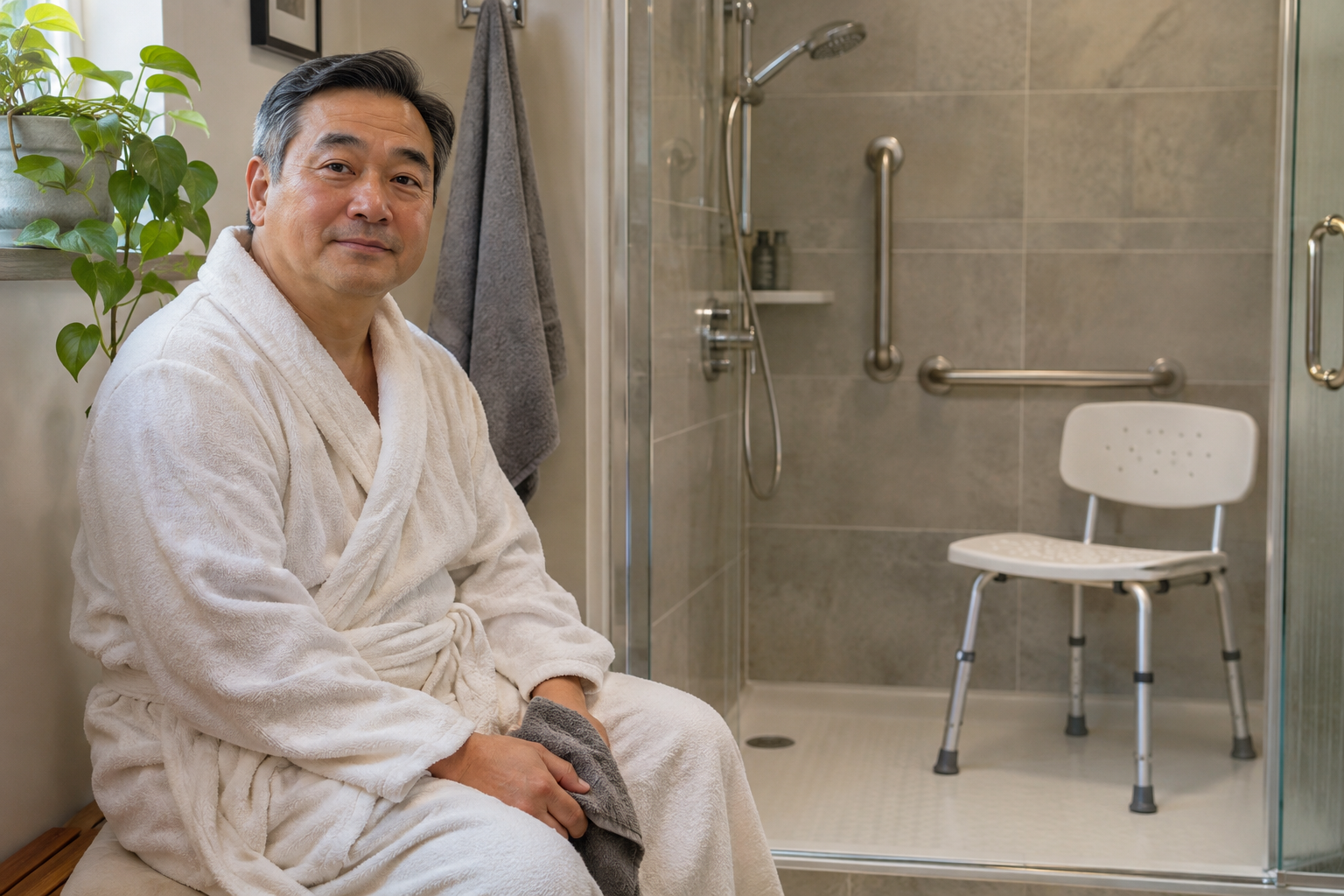
    A shower chair or bench designed for that purpose may help reduce standing. Choose equipment that fits the space and your needs, follow its instructions, and seek occupational therapy or other qualified advice if transfers or balance are difficult. A household stool is not automatically suitable for a wet shower.

    Keep frequently used items within comfortable reach and avoid climbing or stretching for them. Consider water temperature and ventilation as part of your individual symptom plan. If you begin feeling faint, prioritize safety and assistance rather than finishing your hair wash.

    Separate the steps

    Washing your body and washing your hair do not always need to happen together. A seated wash at the sink may be an alternative on some days. Put clothes, a towel, or an absorbent robe nearby so there is less to organize afterward.

    If you are at risk of fainting, discuss a bathing safety plan with your healthcare team and a trusted person. Privacy matters, and so does having a way to call for help.

    Adapting personal care is not giving up on yourself. You are allowed to choose the version that is safer and more manageable today, even if it looks different from your old routine.