A fibromyalgia flare can make an already demanding day feel much smaller. Clothing may feel uncomfortable, sleep may be poor, and familiar tasks can require more effort. When a flare seems to arrive without warning, it is natural to search for a reason.
Looking for patterns can be useful, but it should not become an investigation into what you did wrong. Symptoms can fluctuate even when you have been careful. A journal cannot explain every change, and it does not need to.
Track only what helps
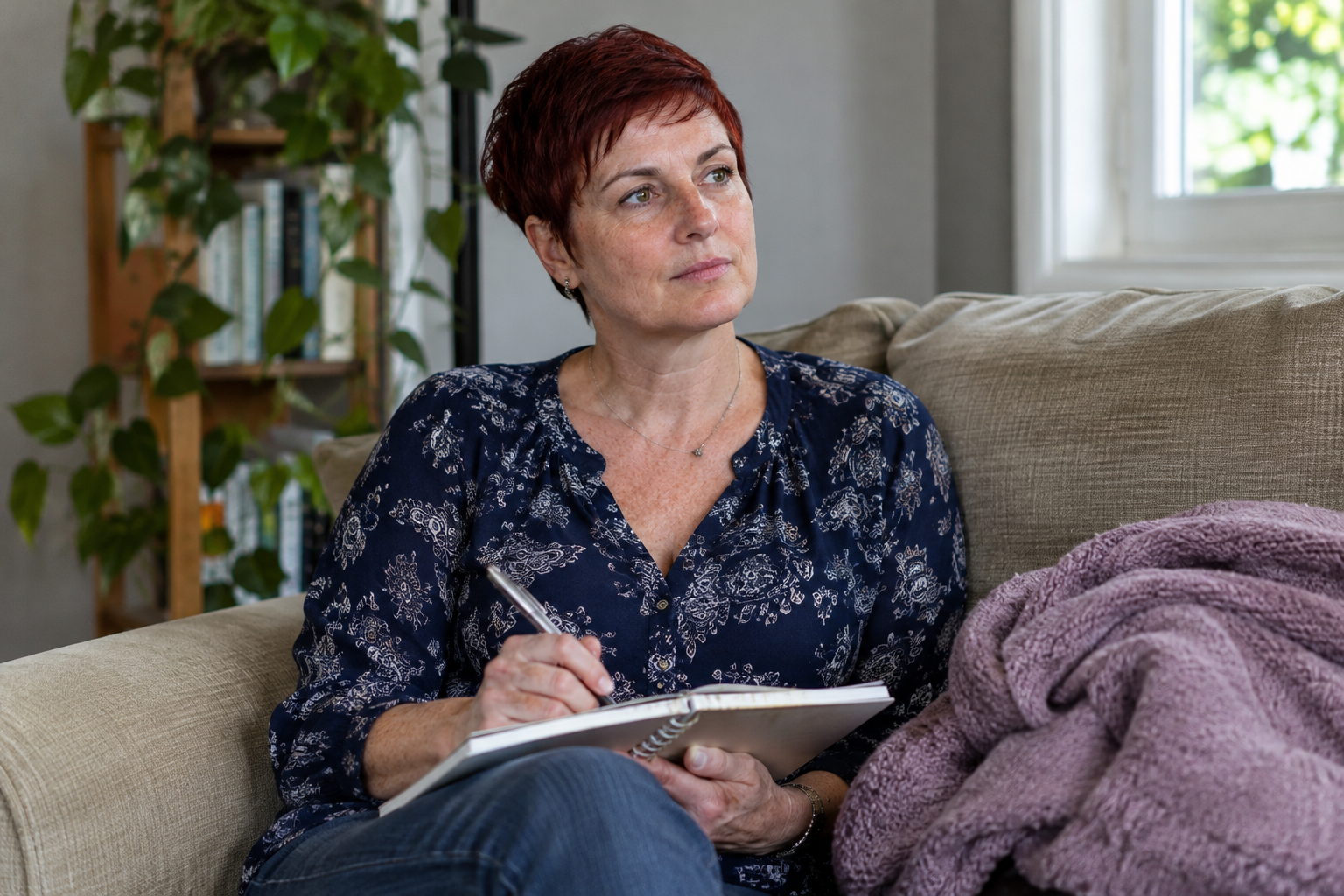
If you want to keep notes, choose a few details: how sleep felt, what demands the day involved, and which symptoms affected your activities. Stop or simplify tracking if it increases anxiety or uses too much energy. Bring useful patterns to your healthcare team rather than treating a correlation as proof of a cause.
Prepare comfort options in advance
Keep familiar supplies accessible and discuss a flare plan with your clinician. That plan may include adapting activities, arranging help, and reviewing treatments that are appropriate for you. If you use warmth for comfort, follow product guidance and avoid overheating or burns; heat may be poorly tolerated with some other conditions.
New, unusually severe, or different symptoms deserve assessment rather than automatically being labeled a flare. You can take established symptoms seriously while remaining open to other explanations.
Your task is not to prevent every difficult day. It is to have support and a workable next step when one arrives.
Further reading: NIAMS: Fibromyalgia care.